
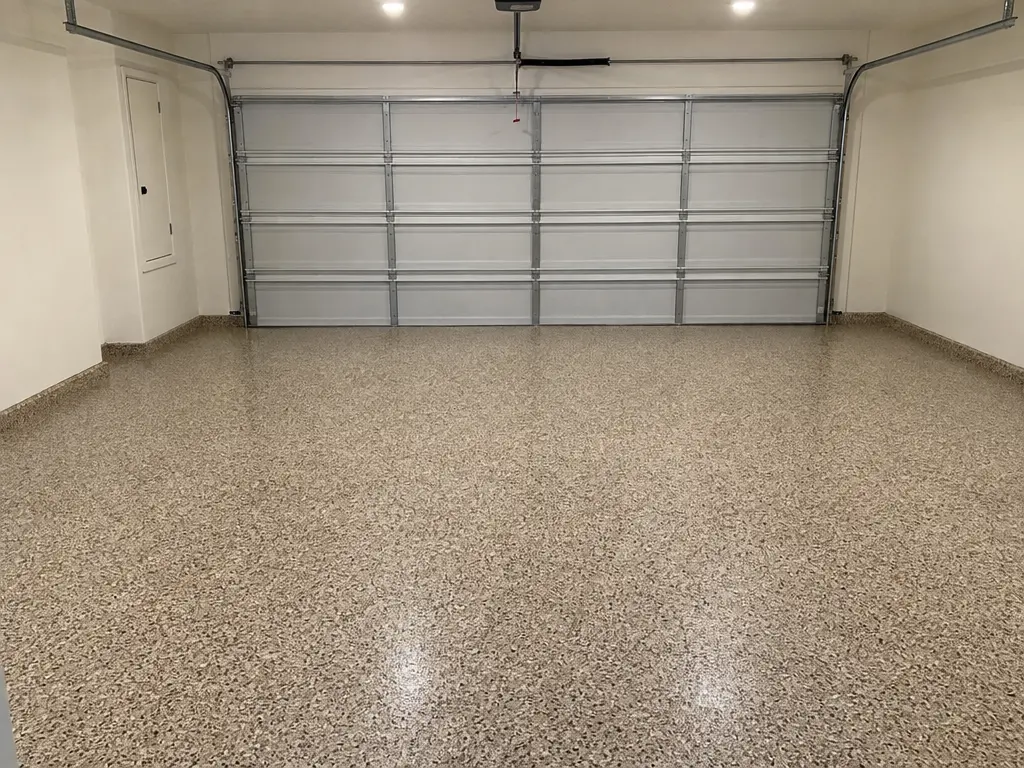
Garage Floor Epoxy
A ground, crack-filled slab under a broadcast flake coat, sized for one-, two- or three-car city garages.
Read more
We coat garages, patios and pool decks across the city, from Huntridge and Desert Shores out to Centennial Hills. Old slab or new, we grind it, check its moisture and write up the price first.
Few places in the valley mix old and new like this one: 13% of homes predate 1970, while about 12% went up after 2009.
Wood-frame, stucco homes on slab foundations from a 1941 federal housing approval, ZIP 89104.
Homes around 8000 W Sahara Ave in ZIP 89117, inside city limits.
Streets off Regatta Dr in ZIP 89128.
Canyon Gate Dr, also 89117, a short drive from our Spring Valley base.
Around the park on N Buffalo Dr, ZIPs 89131 and 89149.
Far northwest along US 95, where new tract homes are still going up.
The 2005 city survey describes these as wood-frame houses on slab foundations, so the concrete here is among the oldest we coat. Expect patches, stains and layers of old finish.
ZIP 89117 is split between the city and Spring Valley, and mail says Las Vegas either way. It changes nothing about the floor. We just note the street address so the estimate names the right place.
Newer northwest streets mean smoother slabs, but smooth is not ready. Unground, even a decent coating can peel along the tire tracks.
A home that just closed is well past the 28 days concrete needs before coating. Leftover cure film is the catch. Grinding takes it off; acid etching does not.
Cool slabs slow the cure. That suits downtown floors needing heavy grinding and patching, since the extra hours aren't fighting the heat.
Spring is one of two windy seasons the weather service names. Gusts carry sand, so doors get shut first.
June averages about 17 days at 100F or above and July nearly 26. Resin sets fast, so we mix less at a time and watch the slab.
September still averages about 8 days over 100F. October drops to almost none, a good stretch for patios and pool decks.
Every ZIP mostly or fully inside city limits, plus the split ZIPs the city shares with its neighbors. Each gets the same on-site look and written estimate.
It really depends on the house. Las Vegas has the most diverse housing stock in the valley, with 12.9% of homes built before 1970 and approximately 12% after 2010. The median year built is 1994. A Huntridge slab from the 1940s could have many layers of paint, patching and oil, and everything must be removed so the coating can bond. 1990s floors off Sahara Ave will generally need cracks filled and stains removed. New slabs in the northwest need the troweled surface opened up. As 62% of homes are detached and 57% owner-occupied, the usual request is a single-family garage. All slabs get a moisture test, regardless of age.
So an estimate starts with the slab's history, not a color chart. Tell us what was on the floor before, and we plan around it.
A coating is only as good as the concrete under it. So every floor in the city, from a 1940s slab downtown to a new one by US 95, gets ground, patched and moisture-checked before anything is mixed. Then you get it in writing.
Six services, all on existing concrete, inside and out. Pick a floor below to read how that work is done.
A ground, crack-filled slab under a broadcast flake coat, sized for one-, two- or three-car city garages.
Read more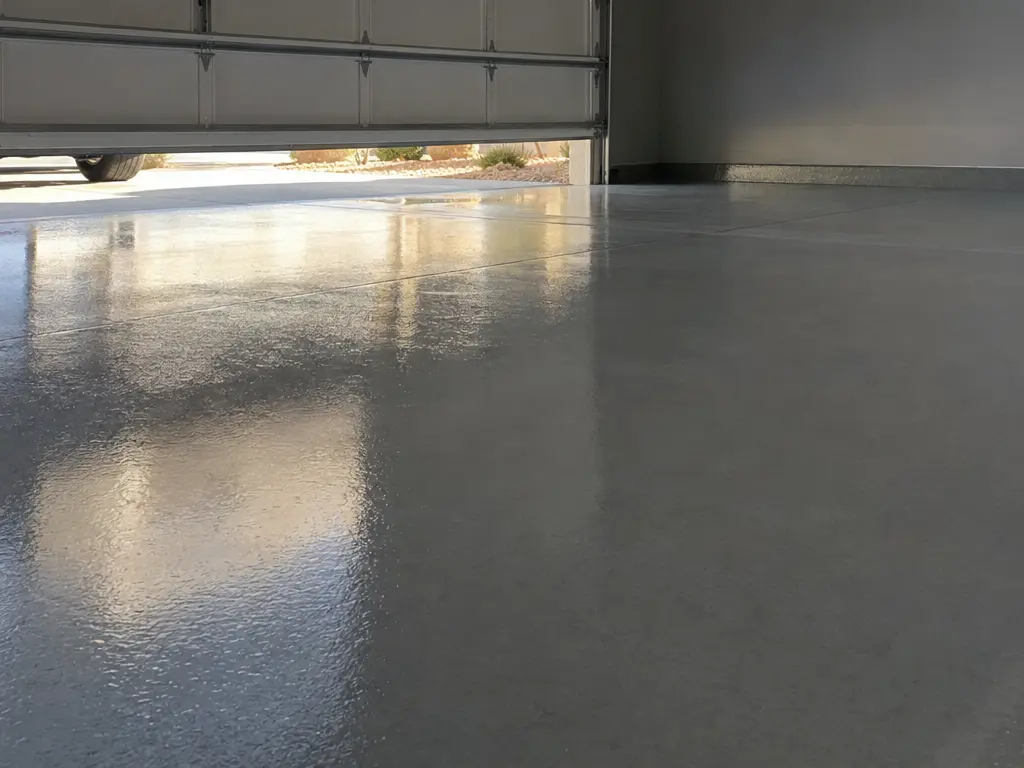
Fast-cure polyurea and polyaspartic coats that stay color-stable in sun, the pick for garages left open.
Read more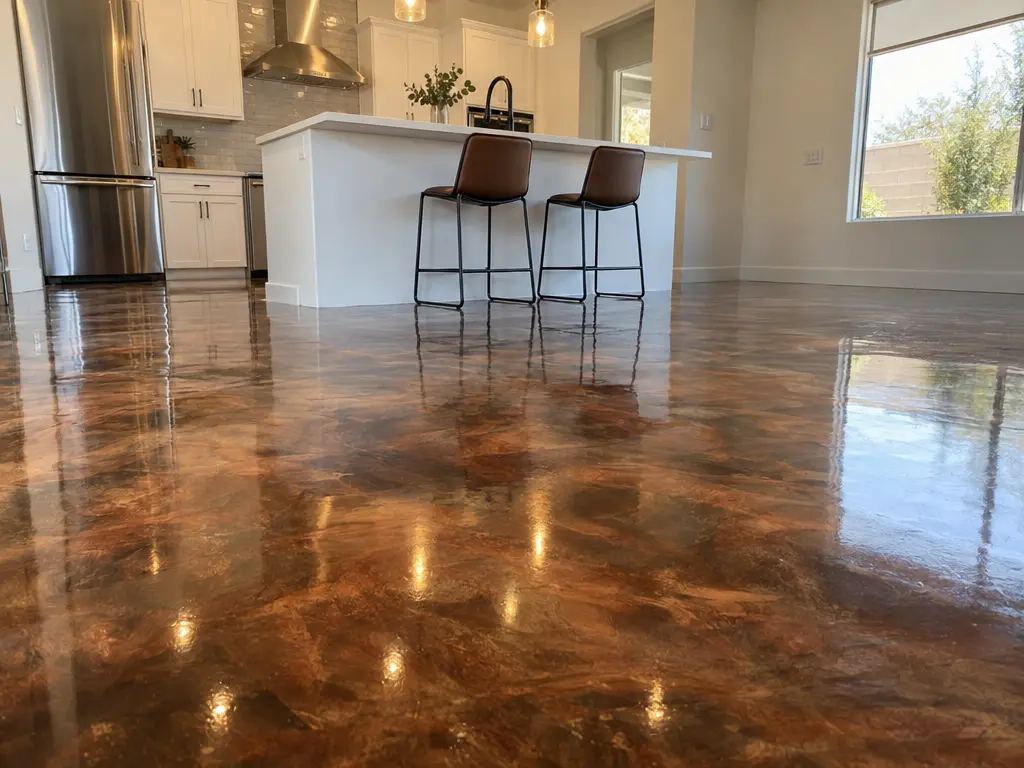
Metallic epoxy with a swirled, marbled look for living rooms, studios and garages built to show off.
Read more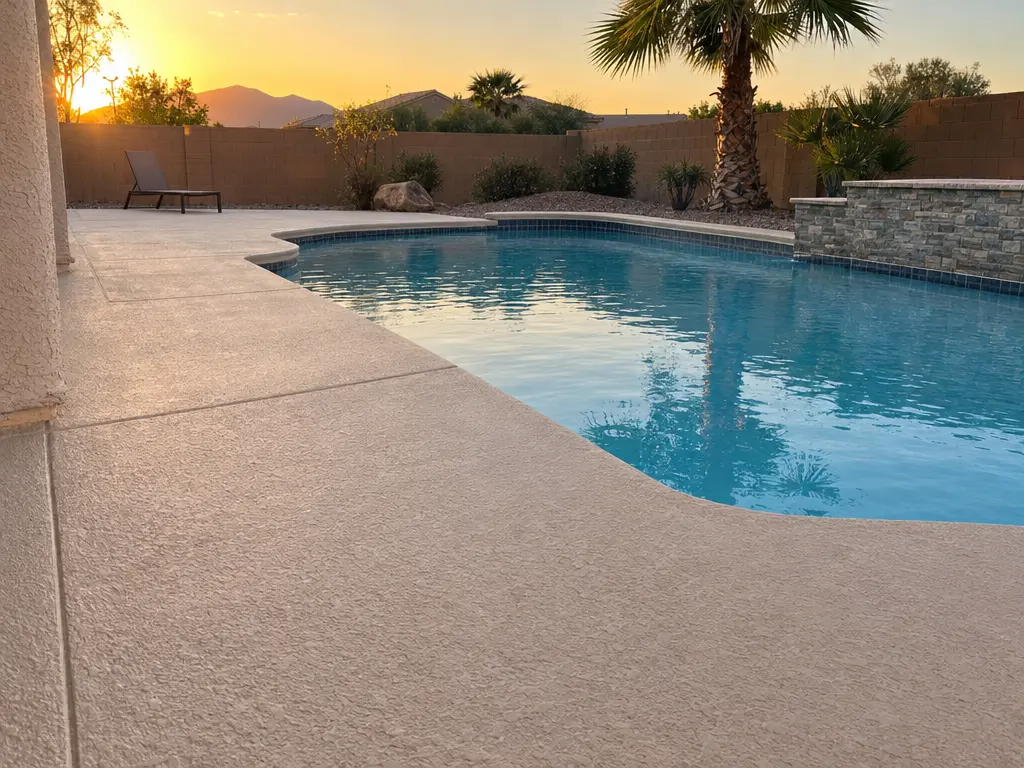
Cool deck texture and coatings that renew worn, stained or slick concrete around an existing pool.
Read more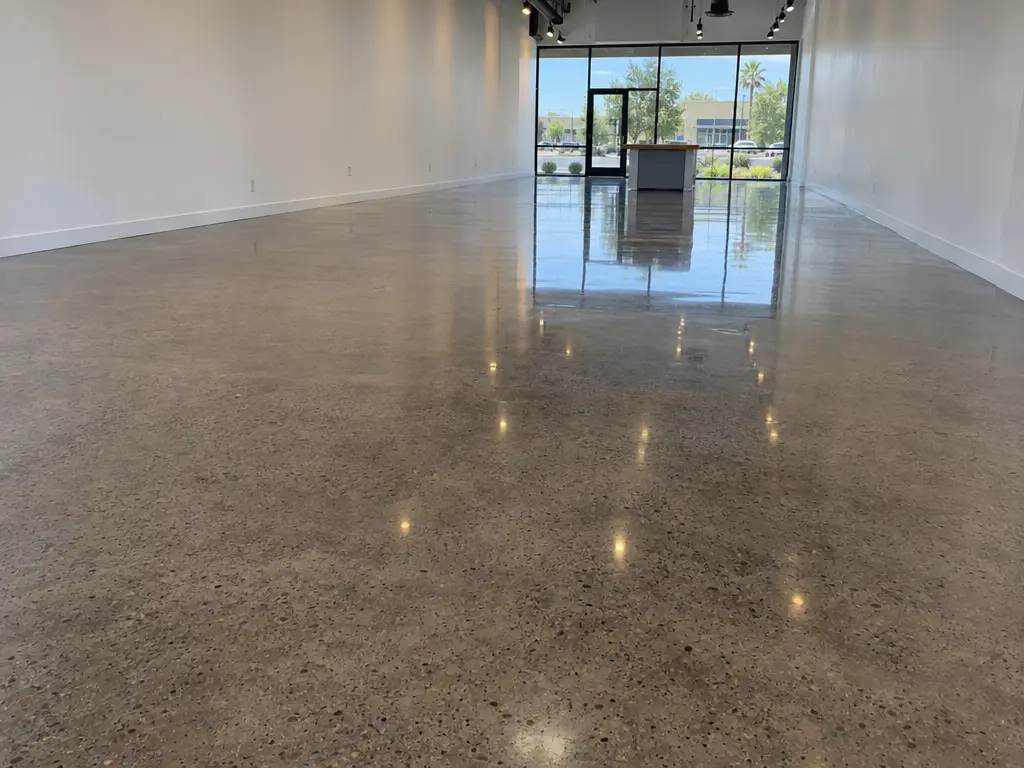
Coatings and polished concrete for shops, offices and back-of-house floors along Charleston Blvd and Rancho Dr.
Read more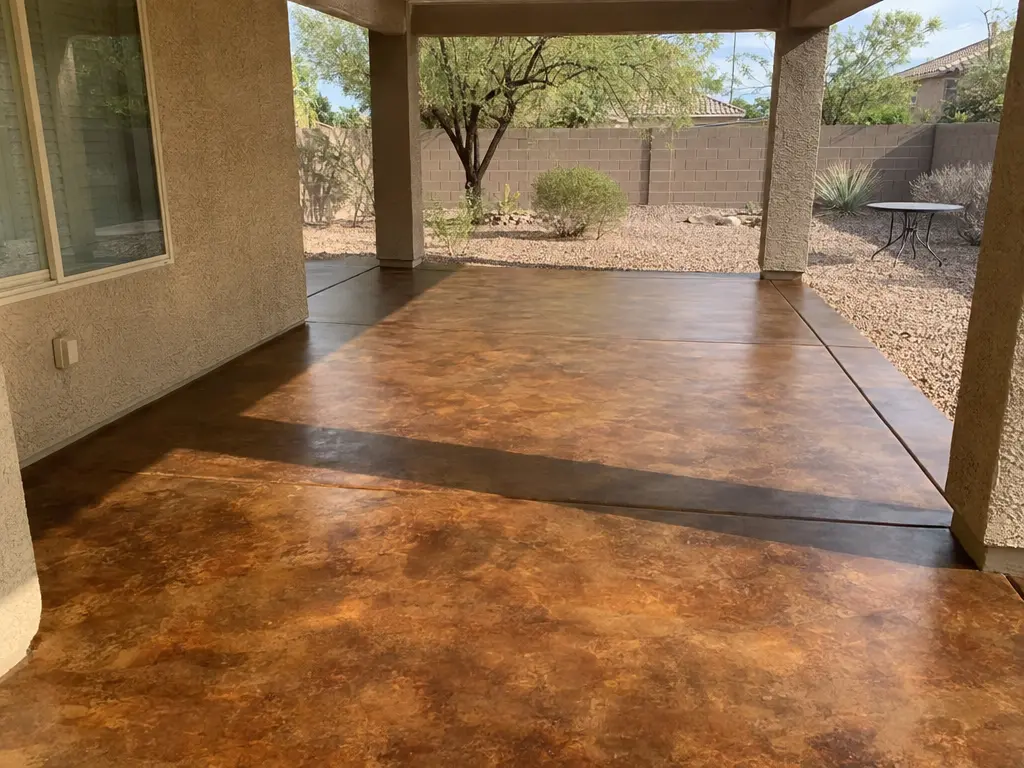
Stains and sealers that give old patios and walks new color, with a breathable sealer where moisture rises.
Read more