
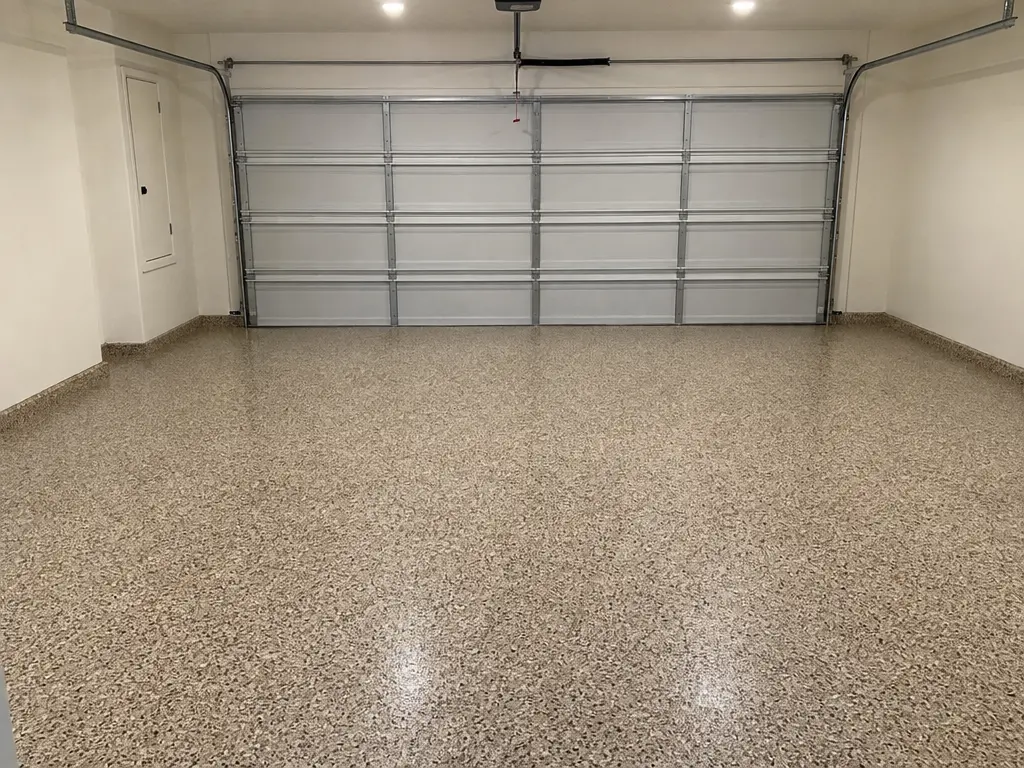
Garage Floor Epoxy
Garage slabs ground, coated in flake epoxy and topcoated, so oil drips and hot tires do not mark them.
Read more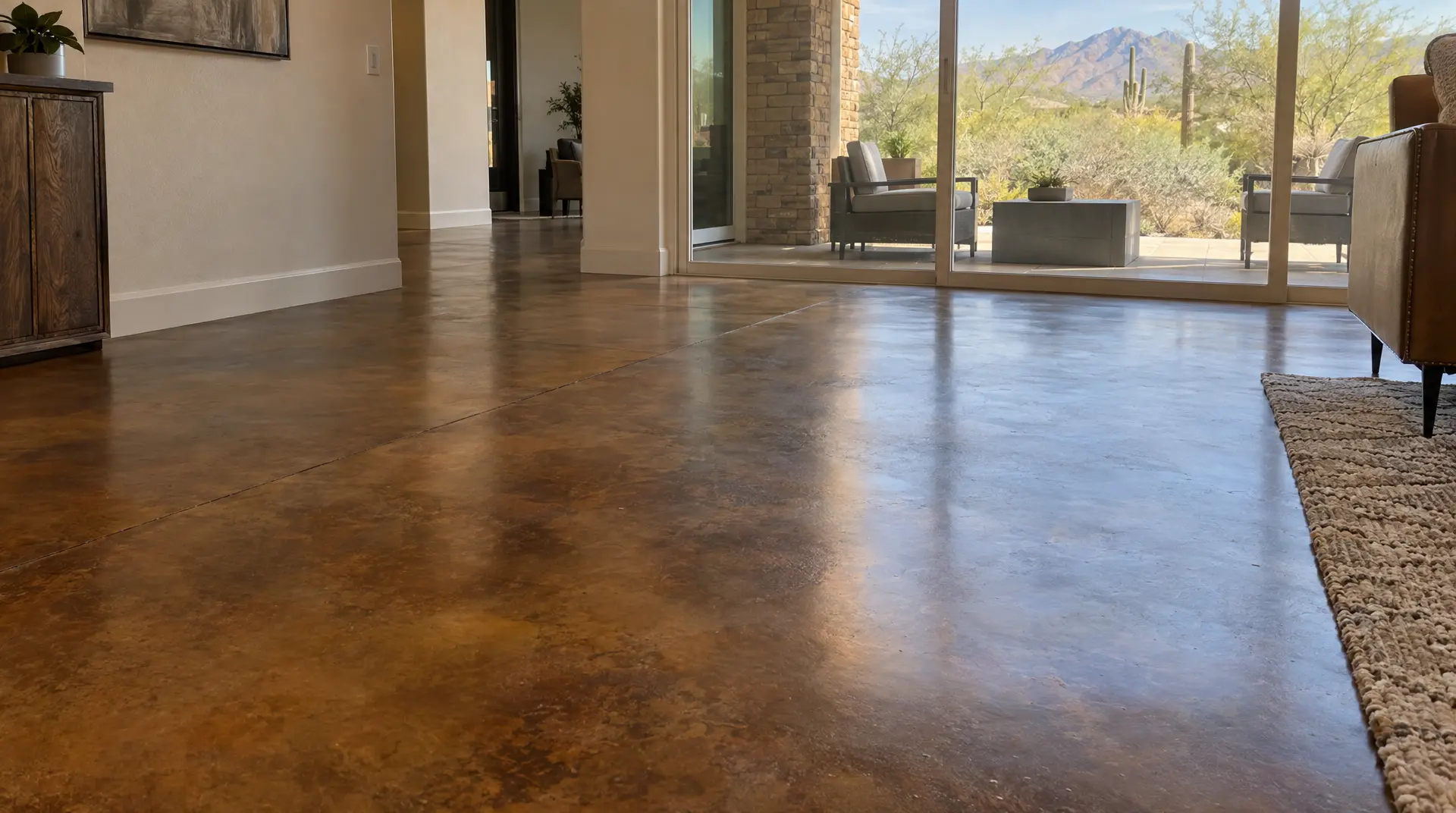
Acid and water-based stains, interior dyes, and penetrating or film sealers for patios, walkways and indoor slabs. We also reseal stamped and stained concrete that has gone dull. Homes and businesses across Spring Valley and Clark County.
These six show up on patios, walks and indoor slabs before a stain or reseal. Most come down to a worn-out sealer. A few point to the slab itself.
Sealer worn through and color bleached by summer sun. Stained concrete usually needs a reseal every two to three years.
Rings from sprinkler or hose water that dried on the slab. Valley water is very hard, and the minerals stay behind.
A film sealer that trapped moisture underneath and turned white. It gets stripped, not sealed over.
Too many coats, or a new sealer that did not match the old one's chemistry, coming off in sheets.
Bare gray concrete with patches and old marks. Acid stain works with the variation; water-based stain gives a more even color.
Salts carried up from inside the slab by moisture. That is a slab moisture issue, so we sort it out before any stain goes on.
Sun, sprinkler water and age. An average year has around 78 days over 100F, and we get really high levels of UV in summer. This causes topical sealers to break down, and any color will fade. Sprinkler and hose water is always leaving mineral build-up on patios once it has dried; valley water is around 16 grains per gallon. Most homes in Spring Valley were built in the 90s and 2000s, meaning a lot of patios and walks have decades of sun damage. We offer a wide range: acid and water-based stains, interior dyes, penetrating and film sealers, and resealing stamped or stained concrete. Around 50% of homes are rentals, so we also reseal between tenants.
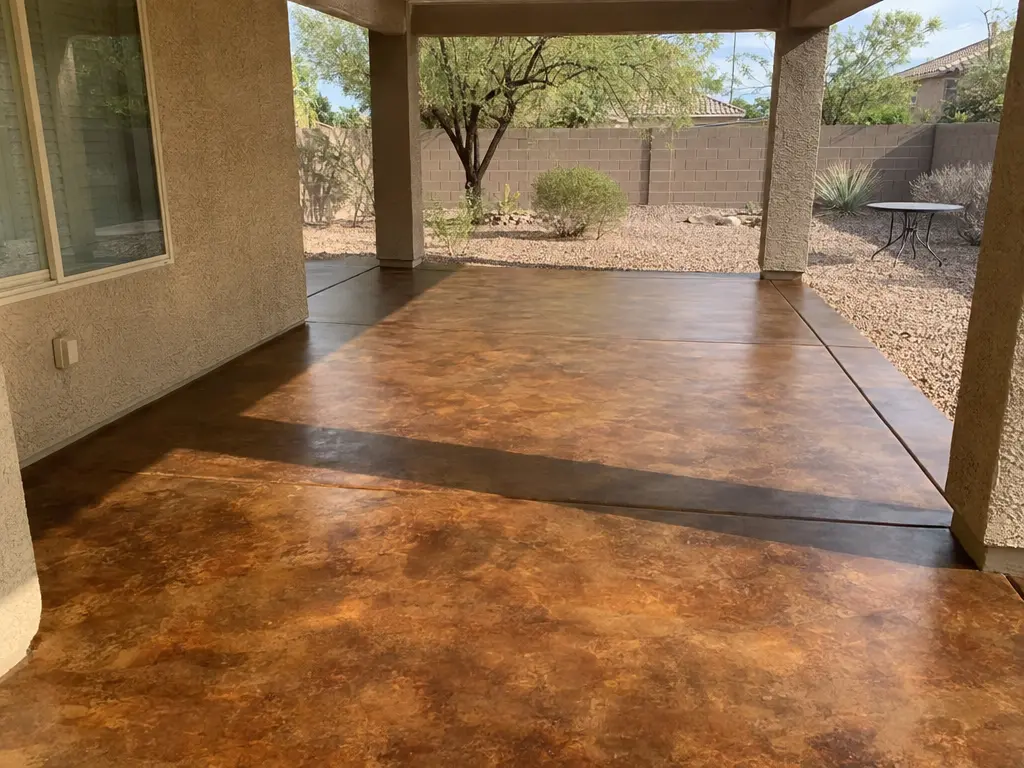
Send the rough size, whether it is a patio, walk or indoor floor, any old sealer on it, and a photo of a color you like.
We check for old sealer, oil and moisture, test a small spot for color where it makes sense, and put the plan and price in writing.
We set a date around the forecast and your sprinkler schedule, since the slab has to be dry. Zones that hit the concrete get shut off.
Clean or grind, stain, then neutralize and rinse acid stain with the water collected. Sealer goes on in two thin coats, not one heavy one.
Color and protection are two separate choices. Pick the colorant for the look, then the sealer for how the slab gets used.
| Product | Look | Outdoors | Upkeep | Fits |
|---|---|---|---|---|
| Acid stain | Mottled, stone-like earth tones | Yes, under a UV-stable sealer | Neutralize, rinse, seal; reseal every 2-3 yrs | Patios, interior slabs |
| Water-based stain | Wider colors, more even | Yes, under a UV-stable sealer | No neutralizing; seal and reseal | Color matching, brighter tones |
| Penetrating sealer | No film, texture and grip stay | Yes, and it breathes | Long service life | Plain walks and drives |
| Film (acrylic) sealer | Sheen, wet look, deeper color | Yes, recoat as it wears | Wears as a sacrificial layer | Stamped and stained patios |
Because stain is unforgiving. Acid stain reacts with whatever is in your slab, so no two floors come out the same. We test first, neutralize before sealing and match the sealer to what is already there. That keeps the new coat from softening or peeling the old one.
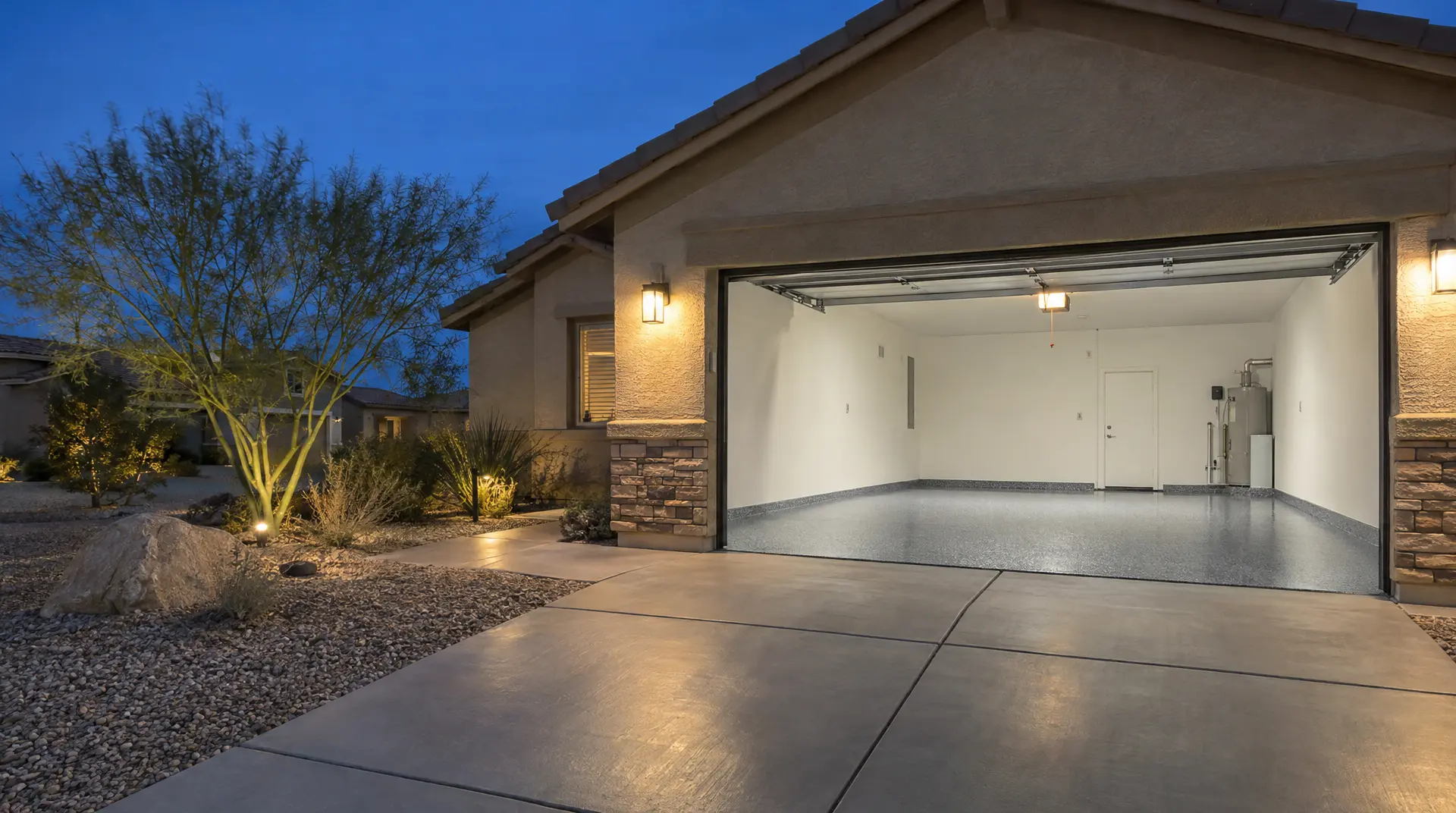
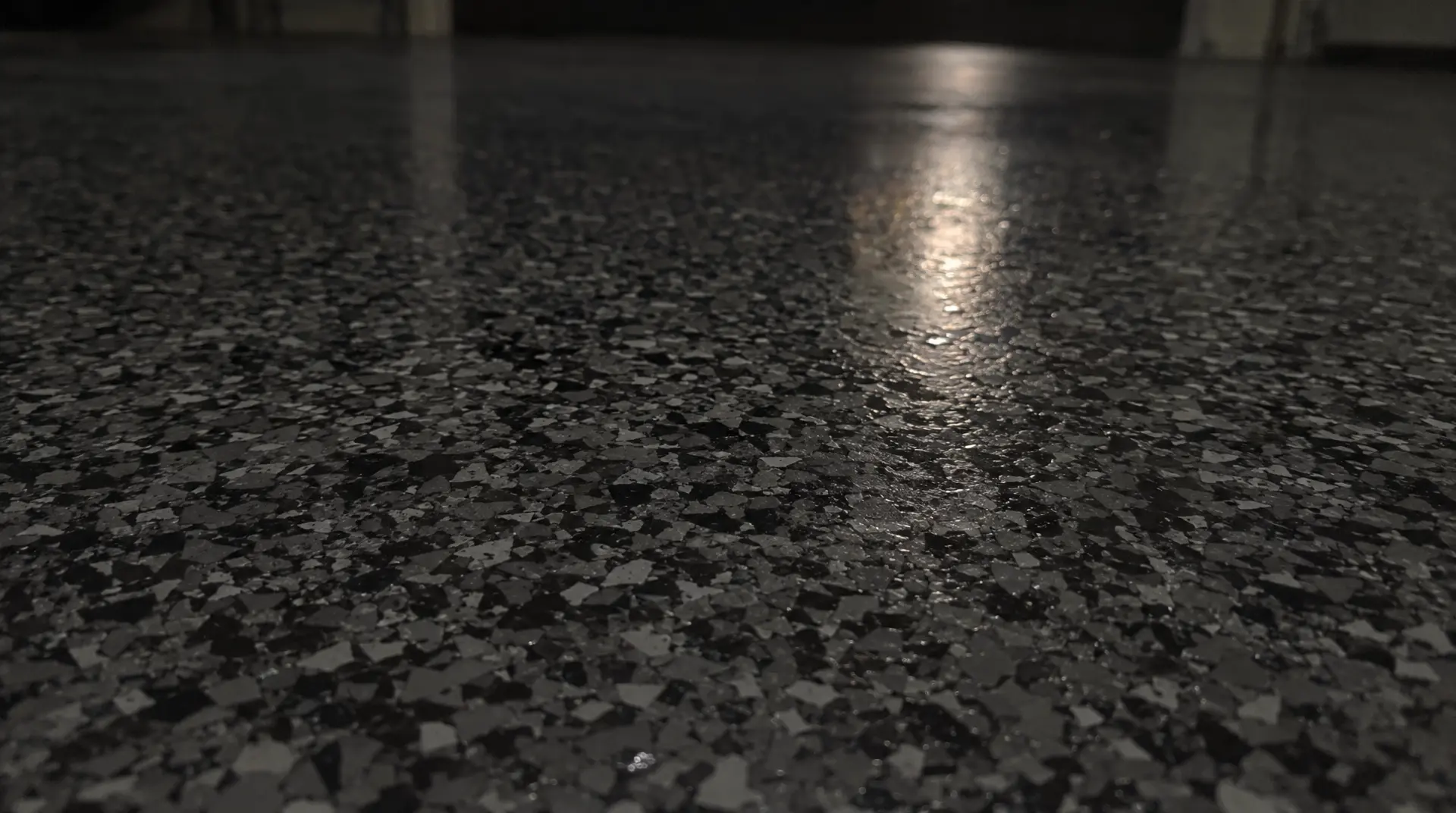
Stain and sealer are one part of it. Here is what else we do with concrete floors and decks around the valley.
Garage slabs ground, coated in flake epoxy and topcoated, so oil drips and hot tires do not mark them.
Read more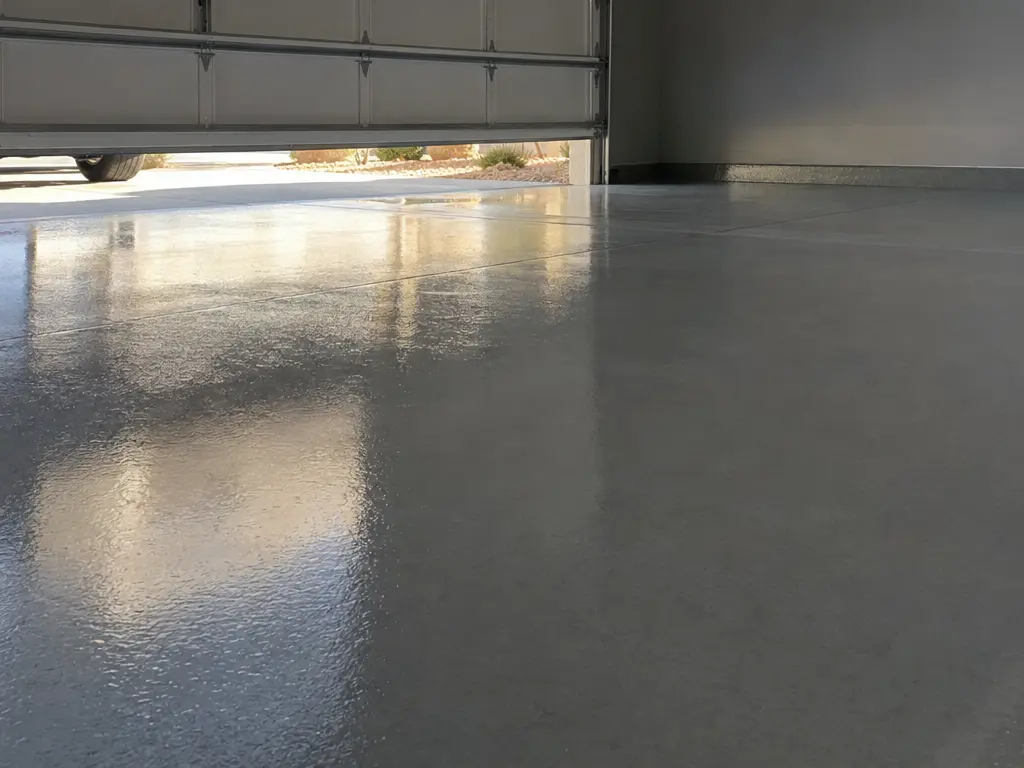
Quick-cure polyaspartic and polyurea garage coatings that resist yellowing under strong Nevada sun.
Read more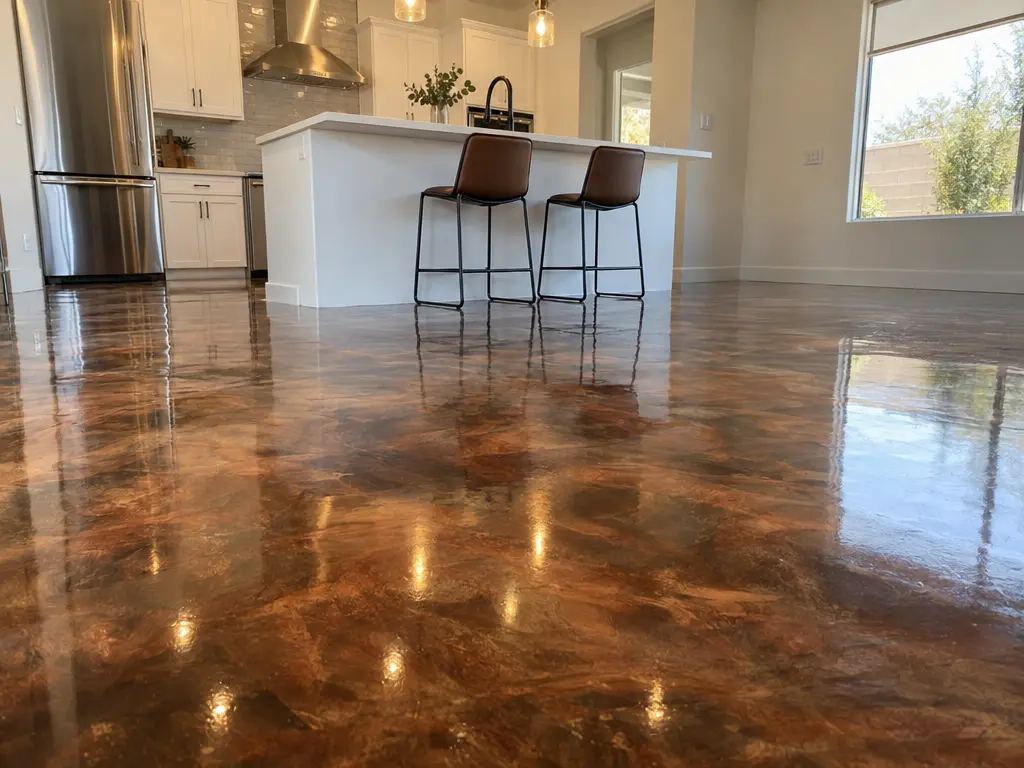
Interior metallic epoxy with a flowing, marbled look, on a slab prepped smooth enough not to show through.
Read more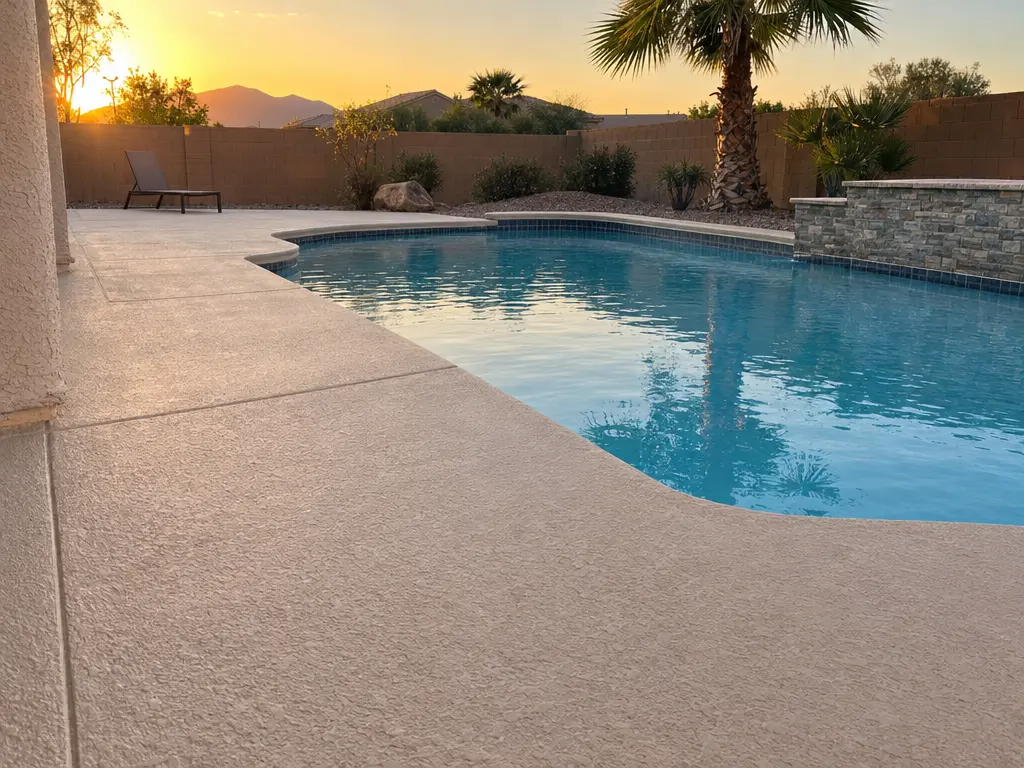
Cool deck texture, deck coatings and crack prep for the concrete slab that surrounds a pool.
Read more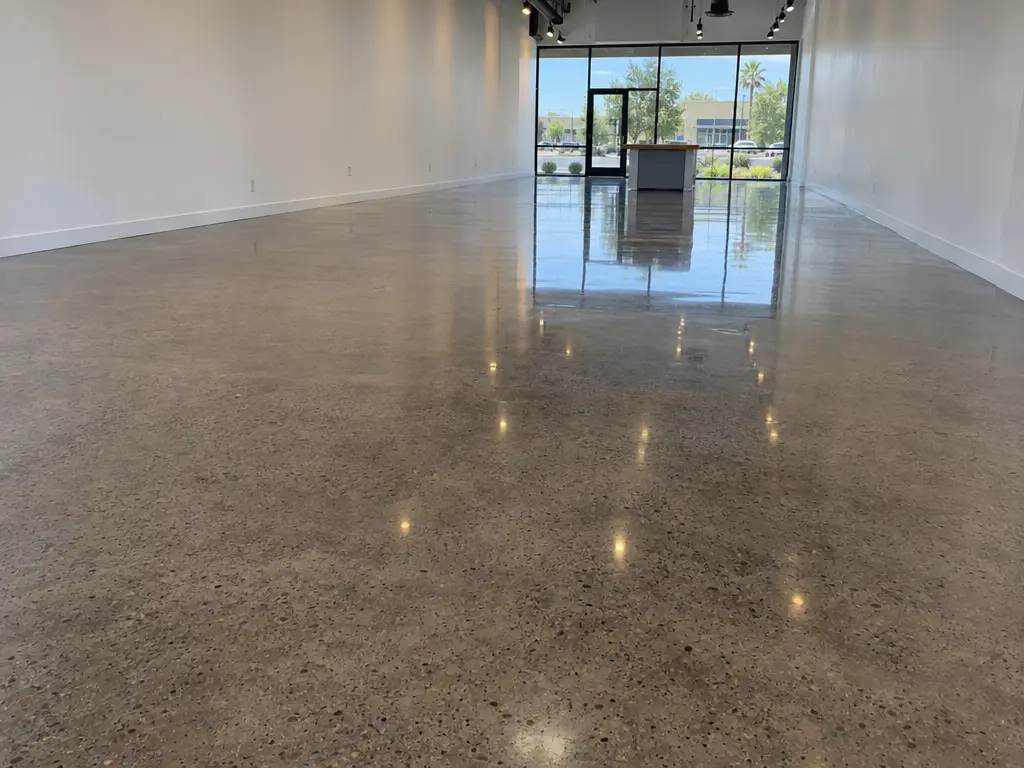
Polished concrete and epoxy systems for business floors, from small shops to open warehouses.
Read moreAcid stain, water-based stain or dye for color, then a sealer chosen for indoor or outdoor use.
Read more