
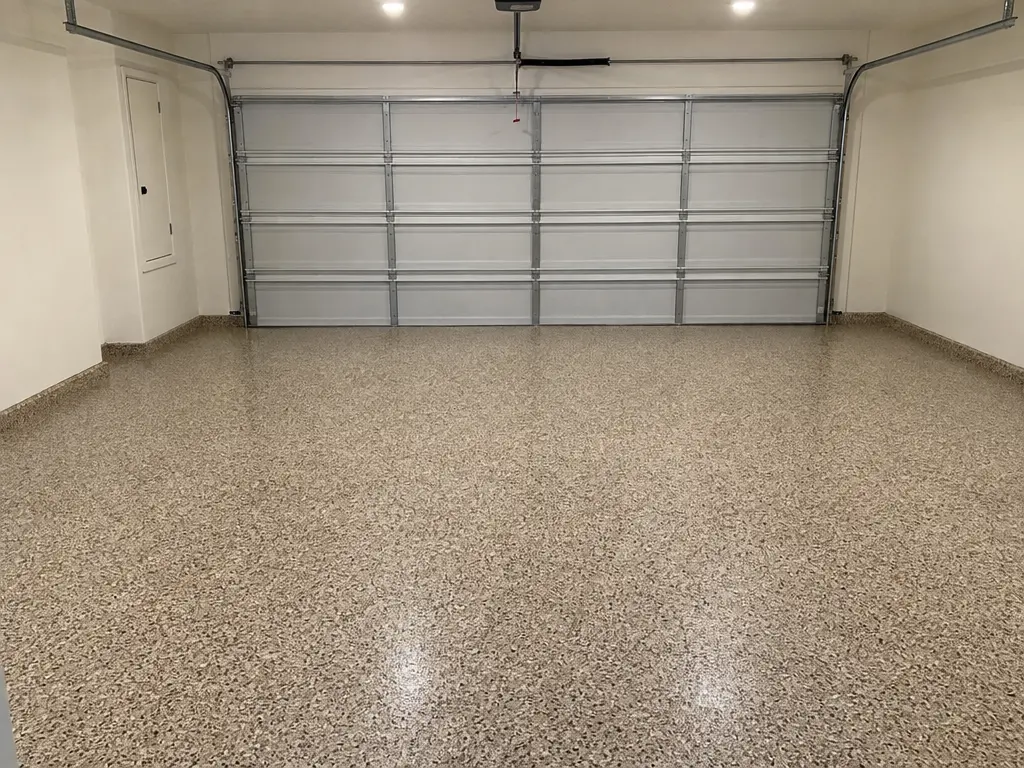
Garage Floor Epoxy
Ground, moisture-tested slabs with an epoxy base, full flake broadcast and clear top coat that stands up to oil and tires.
Read more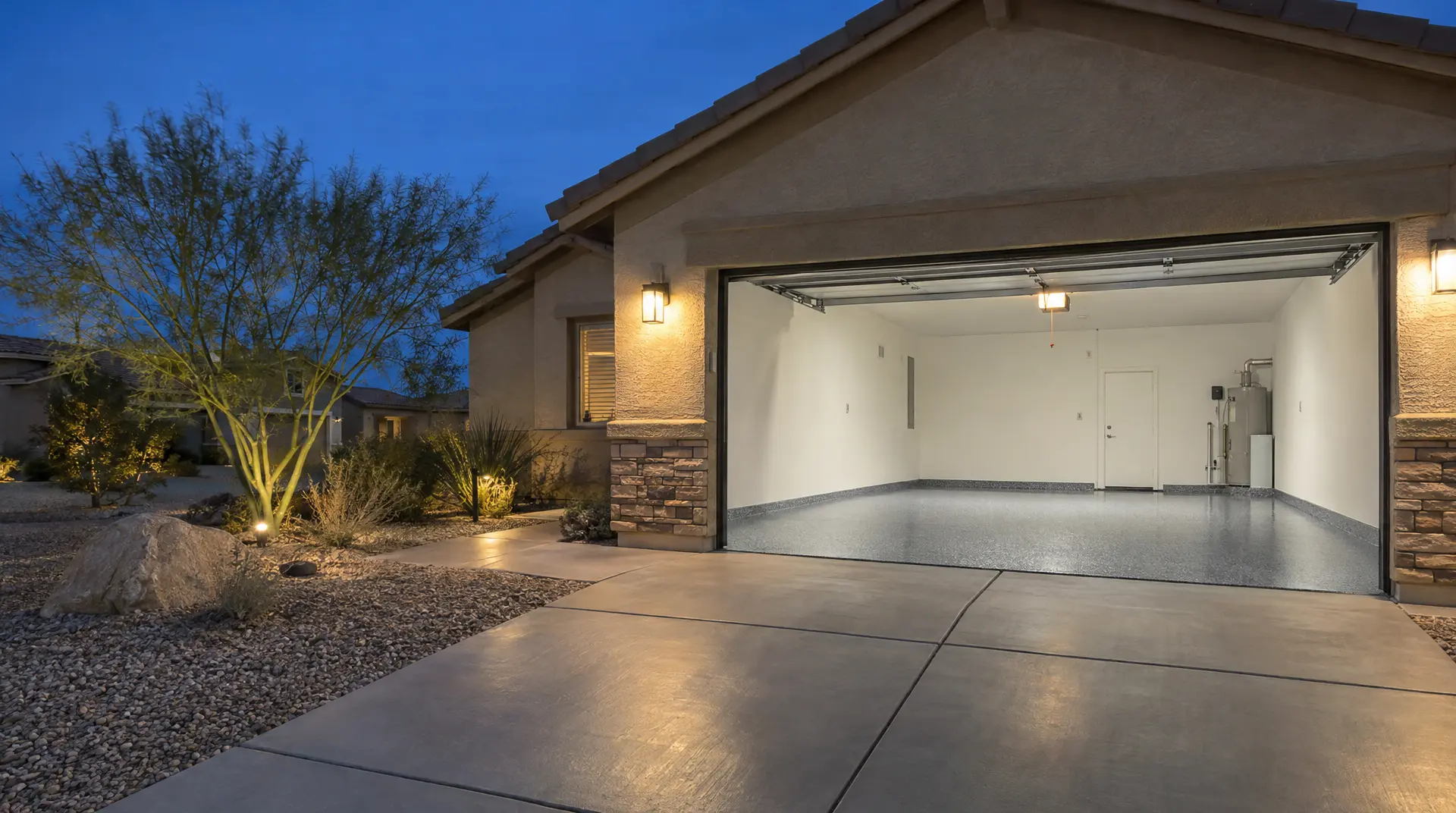
Flake epoxy garage floors for Spring Valley homes and the wider Las Vegas valley. We grind the concrete, test it for moisture, fill the cracks, then build the coating in layers. Every price comes in writing first.
Most garage floors we look at have one of these six problems, often two. Some are plain wear. Others are a failed coating, or a kit that never stuck. Find yours below and mention it when you call.
Hot tires soften a thin coating, then grip and lift it as they cool. The classic sign of a kit floor.
Bare slabs drink up oil and transmission fluid. No coating will hold there until the stained layer is ground out.
Worn cement paste turns to powder and tracks into the house. Monsoon dust blowing under the door adds to it.
Common in older tract slabs. We fill static cracks as prep, and the flake broadcast hides the faint lines left.
Hose and car-wash water dries on the slab and leaves hard-water spots. Valley water runs about 16 grains per gallon.
Air escaping a warming slab through wet coating. It happens when a floor gets coated as the concrete heats up.
Heat. Tires. Age. In Las Vegas we see an average of 78 days a year reaching 100F or higher (NOAA 1991-2020 normals). In 2024 we had over 100 days above that! The heat of your tires after pulling in off the 215 on a July afternoon will soften any poor coating you may have. Age is also a factor. Approximately 54% of homes in Spring Valley were built between 1990 and 2009, so most garage slabs have years' worth of oil, tire marks and old sealer. We recommend a thorough preparation process: vacuum-shrouded diamond grinding, a moisture test and crack filling, followed by a 100% solids epoxy base, a full vinyl flake broadcast and a clear polyaspartic top coat.
Tell us the garage size, what is on the floor now, and how you use the space. Photos of stains or peeling help a lot.
We look at the concrete in person, test for moisture, note cracks and old coatings, and hand you a written estimate by the square foot.
We agree a day that suits you. In summer we plan around slab temperature, because heat shortens working time and speeds the cure.
Grind, fill, base coat, flake, clear top coat. Dust goes into the vacuum as we work, and the driveway is left swept.
Four systems go down on garage slabs here. Sun, cure speed and looks separate them.
| System | Finish | UV / sun | Cure | Suits |
|---|---|---|---|---|
| Flake epoxy | Vinyl chips in a thick base, about 35 mils | No, epoxy ambers; needs a UV-stable top | Slower, speeds up in heat | Closed garages, daily parking |
| Polyaspartic | Clear or flake, rolled by hand | Yes, aliphatic, no yellowing | As fast as 2 hours per coat | Doors left open, sunlit floors |
| Polyurea | Fast-set base, often under polyaspartic | Aliphatic yes, aromatic ambers | Sets in minutes, sprayed | Base coat in layered systems |
| Metallic epoxy | Swirled, marbled, one of a kind | No, keep it out of direct sun | Primer, metallic coat, clear top | Show garages, interiors |
Prep. Kit floors fail because they sit on smooth, etched or dirty concrete. We grind every garage to an open profile, test for moisture, and show you the reading before we coat. Locally owned.
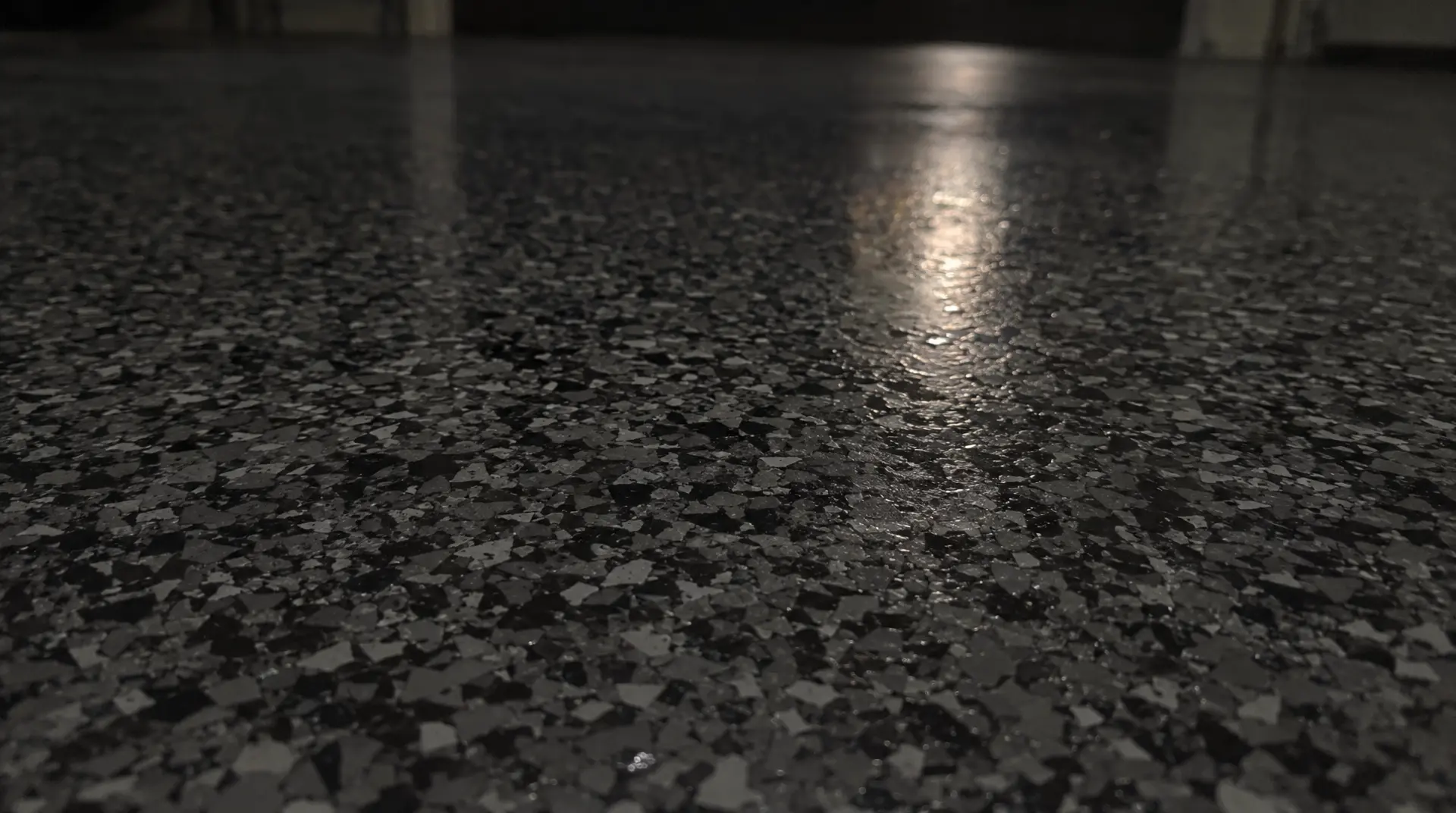
Garages are most of our work, but the same grinders and the same prep standard cover patios, pool decks, shops and stained concrete.
Ground, moisture-tested slabs with an epoxy base, full flake broadcast and clear top coat that stands up to oil and tires.
Read more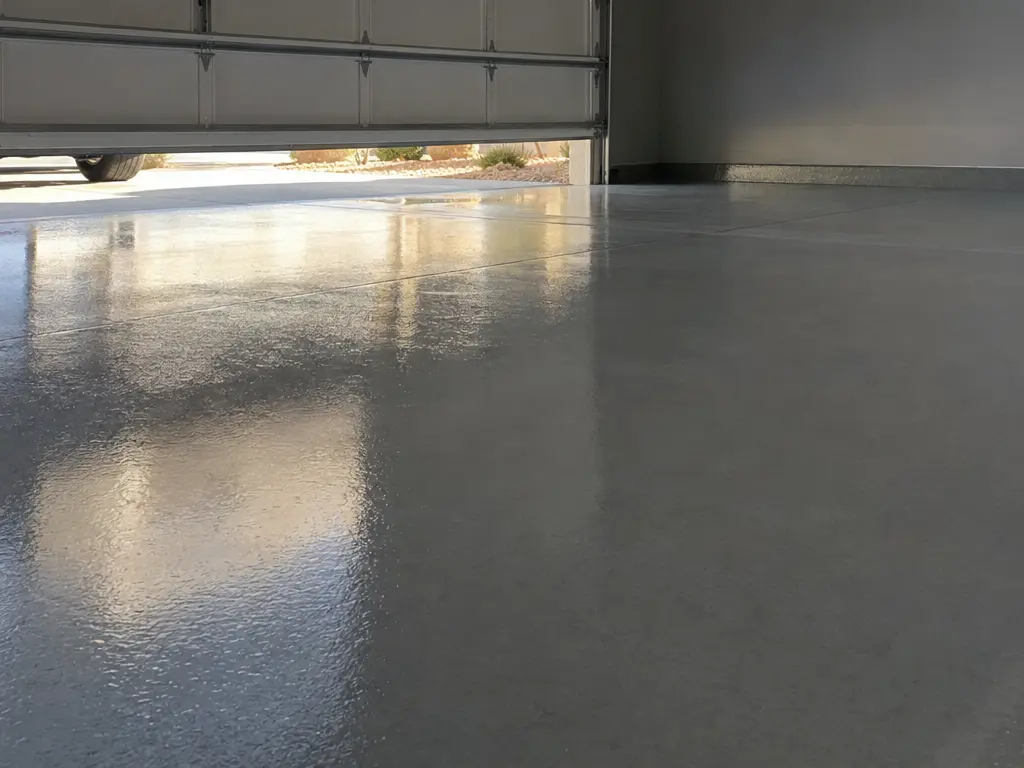
Polyaspartic and polyurea systems that cure in hours per coat and hold their color where afternoon sun reaches the garage floor.
Read more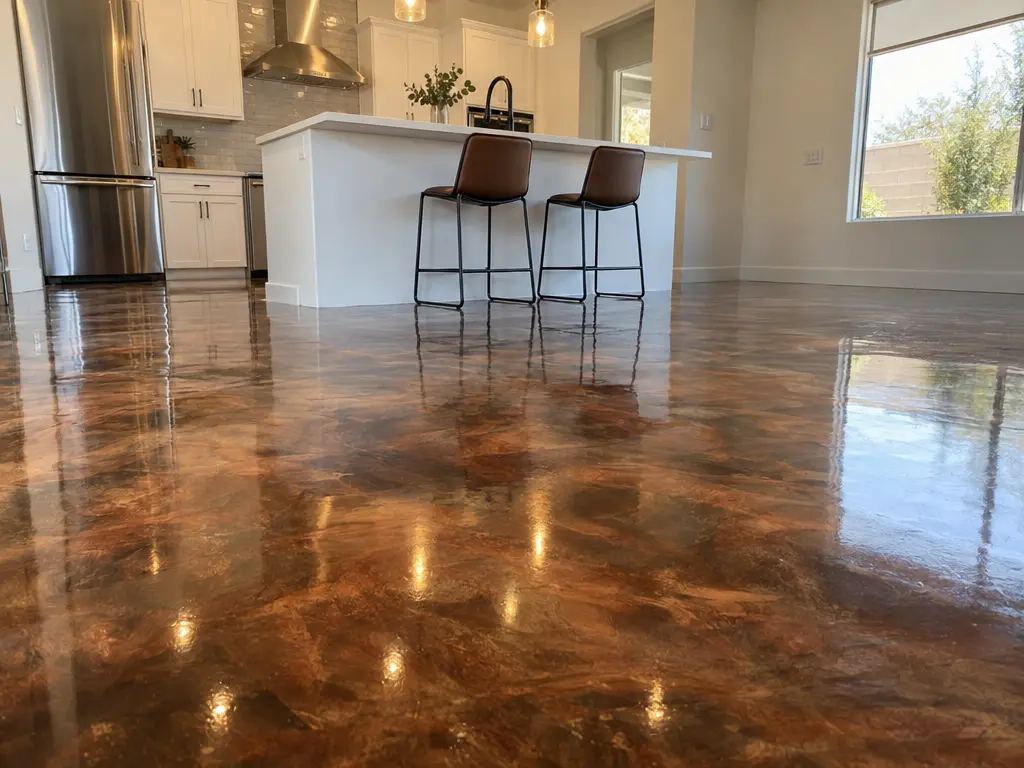
Swirled metallic pigment in clear epoxy over a tinted primer, for living rooms, offices and show garages. Every floor comes out different.
Read more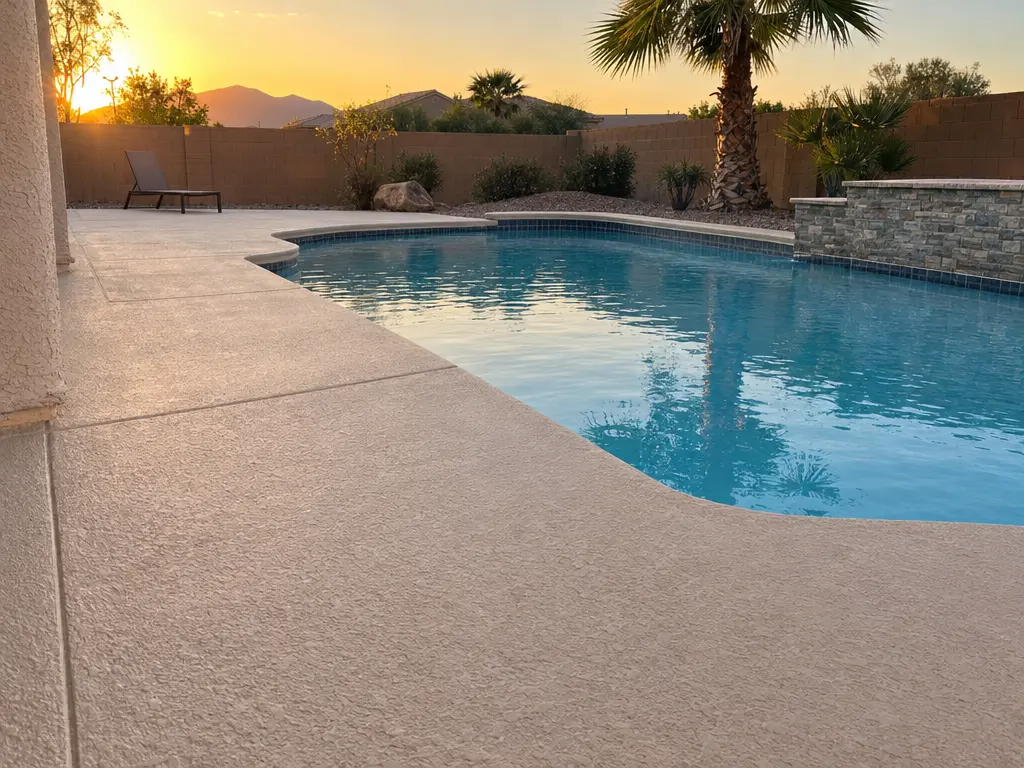
Textured cool deck and coating work for pool surrounds, with a light finish people pick for bare feet on summer afternoons.
Read more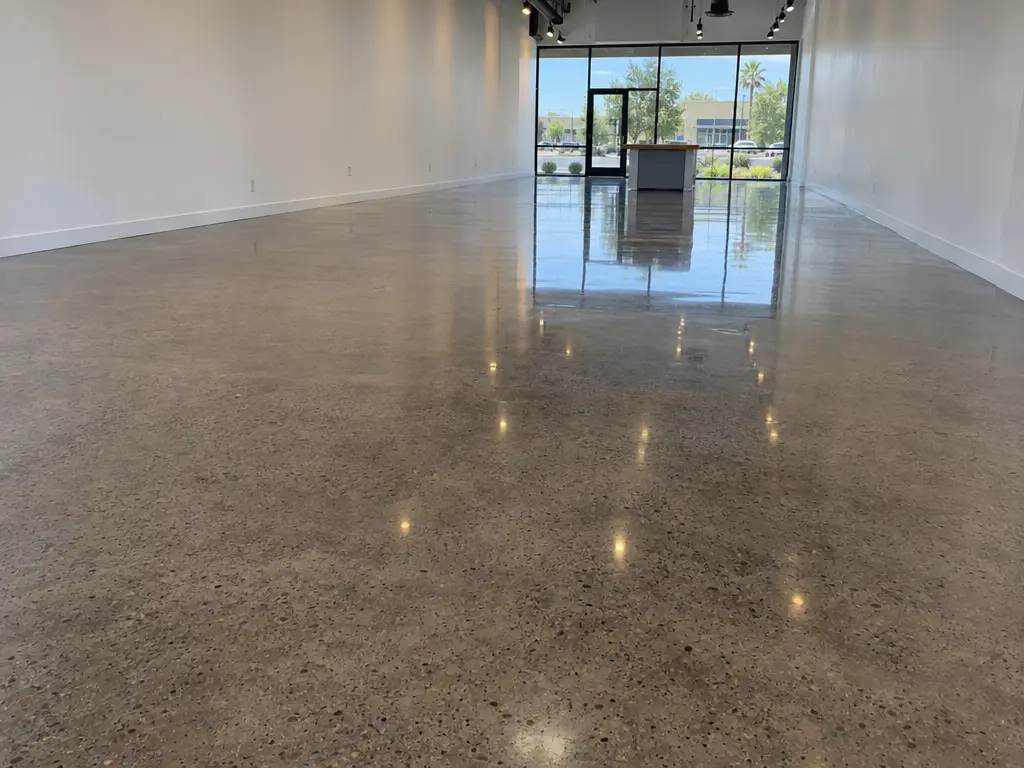
Polished concrete and resin floors for shops, offices and warehouses across the valley, ground with diamond tooling and dust collection.
Read more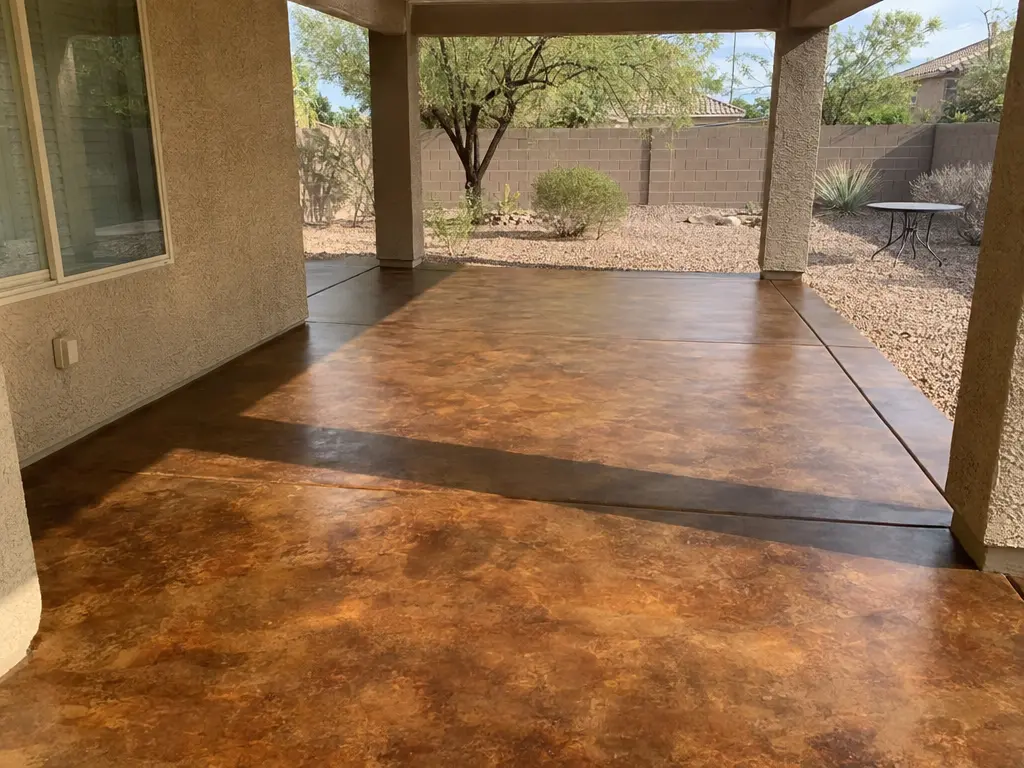
Acid and water-based stains for patios and interior floors, sealed afterward so the color stays protected from wear and weather.
Read more