
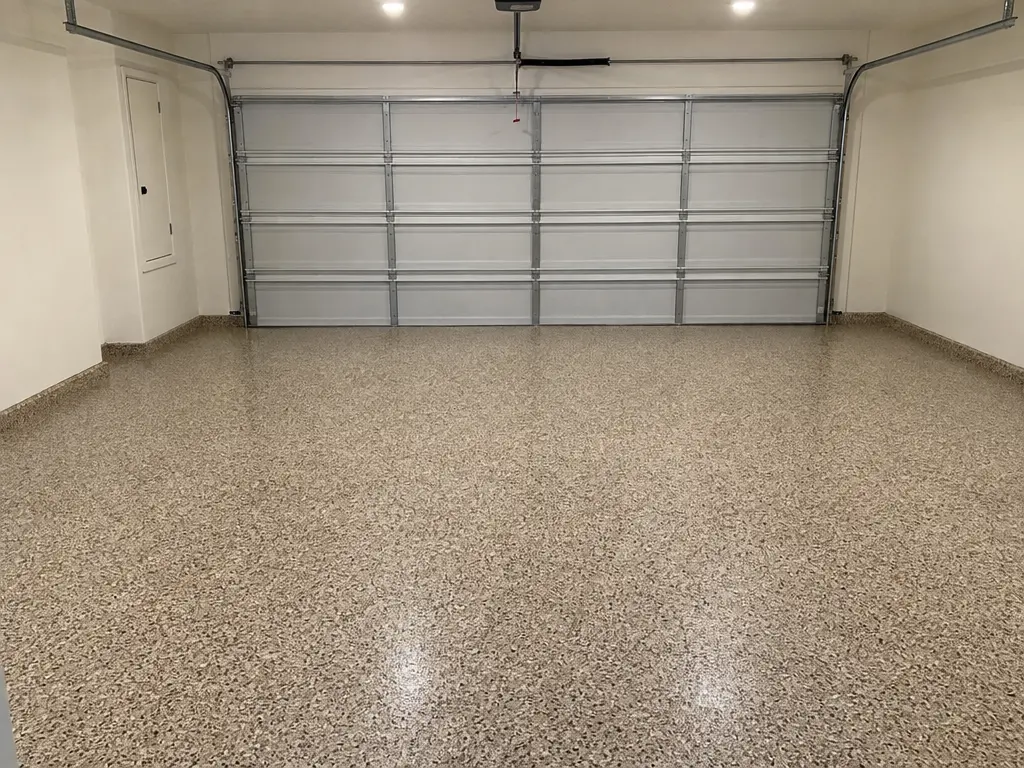
Garage Floor Epoxy
Flake epoxy that turns a stained tract-home slab into a floor you can mop clean and park on.
Read more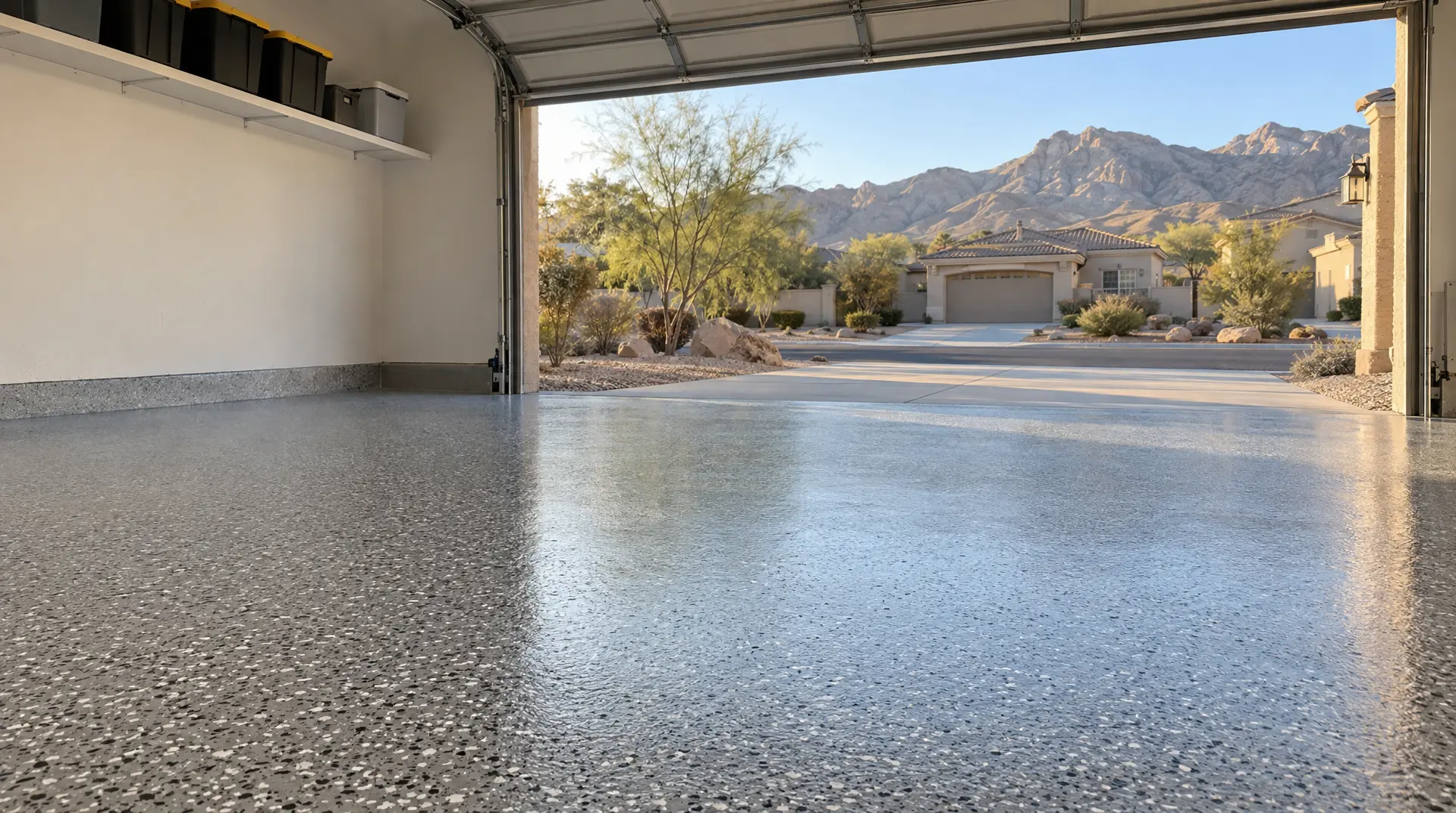
Flake and polyaspartic garage floors, pool deck texture and sealing for tract homes from Aliante down to Craig Rd. Every slab is diamond-ground and moisture-tested, with the estimate in writing before any work.
Three in four homes here are detached houses, the highest share of the valley's three cities, and most went up after 2000.
ZIP 89084 along Aliante Pkwy, including the Sun City Aliante area.
Streets around Craig Ranch Regional Park, a common first-coating stop.
Homes near the 22,650-acre fossil beds monument, set aside in 2014.
Homes near the 215's north leg.
About 8% of the city's homes predate 1970, slabs with real history.
Garages and light commercial floors side by side.
Many garages here are 20-year-old bare concrete with oil soaked in where cars park. Oil repels resin and leaves fisheyes, so it gets degreased and ground out before any coat.
If a roll-on kit is peeling, all of it has to go. Water-based kits dry to a thin film, a few mils, and hot tires pull it up. We grind to bare concrete and build a real system.
Streets beside open desert catch blown sand on windy days. Grit dulls a topcoat over time, so a flake floor with a hard wear layer suits these garages.
Floors from before 1970 may be patched, painted or uneven. Static cracks get routed and filled, moving joints stay open, and low spots get leveled as prep.
Cool slabs mean slower cure and longer waits between coats. A sensible stretch for garages that need a failed kit and oil ground out.
Strong winds peak in spring. Near open desert, blown sand reaches garages easily, so doors stay down and the slab is cleaned before each coat.
2024 brought more than 100 days at 100F or above, a record. Polyaspartic sets quickly in heat, so batches stay small.
Monsoon moisture moves in during July and August, then fades by September. Humid air can blush epoxy, so we watch the dew point.
Six ZIPs that sit almost entirely inside the city, plus the part of 89115 within city limits. Same visit and written estimate at each.
They mean lots of 20-year-old concrete slabs that will be coated for the first time. North Las Vegas has the highest share of detached homes of the valley's three cities, at 75%. 42% of homes were built between 2000 and 2009, giving a median build year of 2003, and 64% are owner-occupied. The slabs will generally have oil stains, tire marks and some small cracks. Some will also have a peeling roll-on kit. All of these are ground out or filled before coating. Approximately 8% of homes were built before 1970, and those get extra attention to check for old paint and repairs.
Most jobs follow one spine: grind, repair, moisture test, then flake under a color-stable topcoat. What changes is how much repair the slab needs, and the written estimate spells that out.
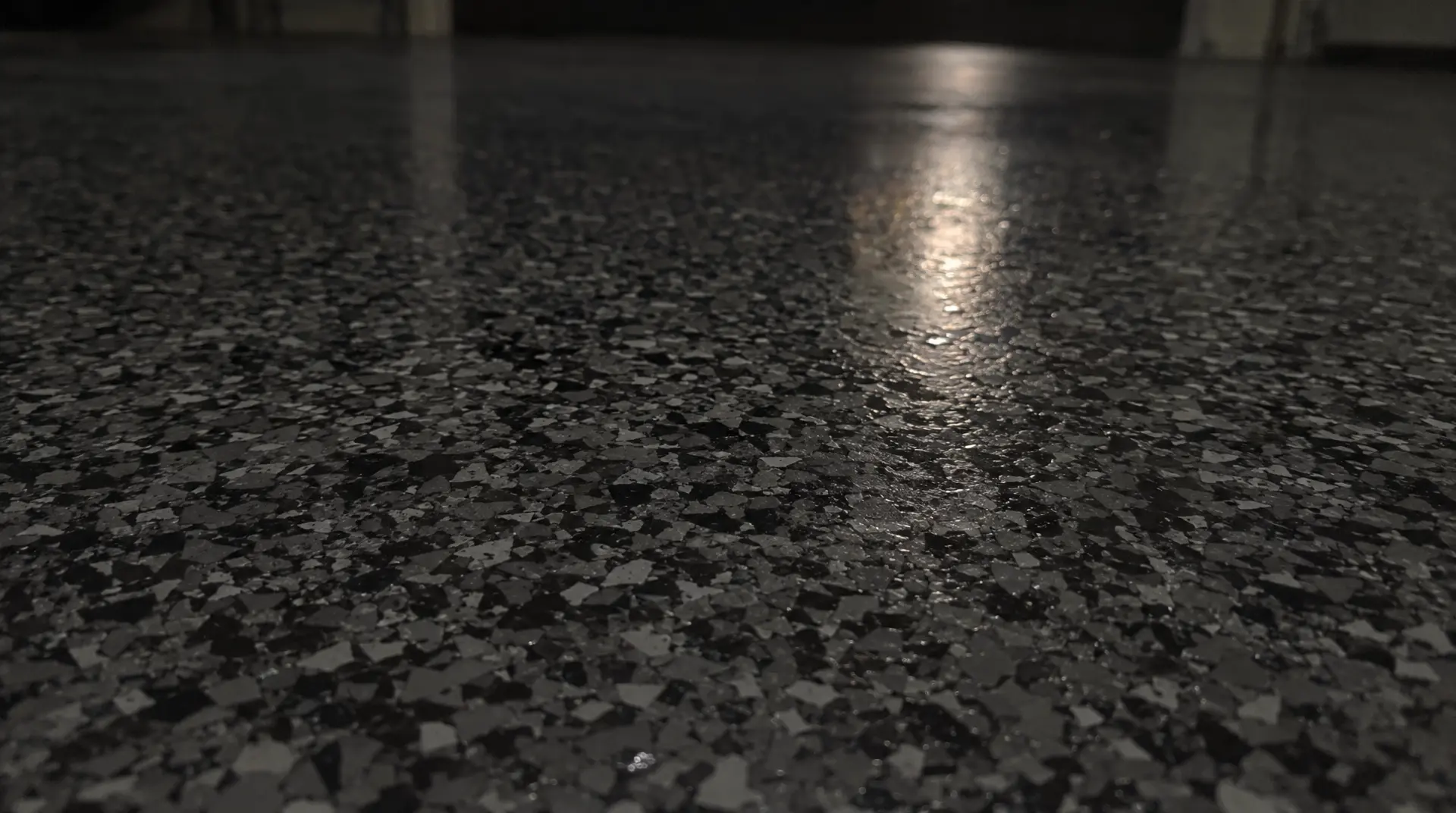
The full prep, every time. Old kits and oil get ground out, cracks get filled, and the slab gets a moisture reading before the base coat. The topcoat is aliphatic, so it won't yellow when the door is open to the afternoon.
Garage, interior and backyard concrete first, with shop floors too. Each card opens the full page.
Flake epoxy that turns a stained tract-home slab into a floor you can mop clean and park on.
Read more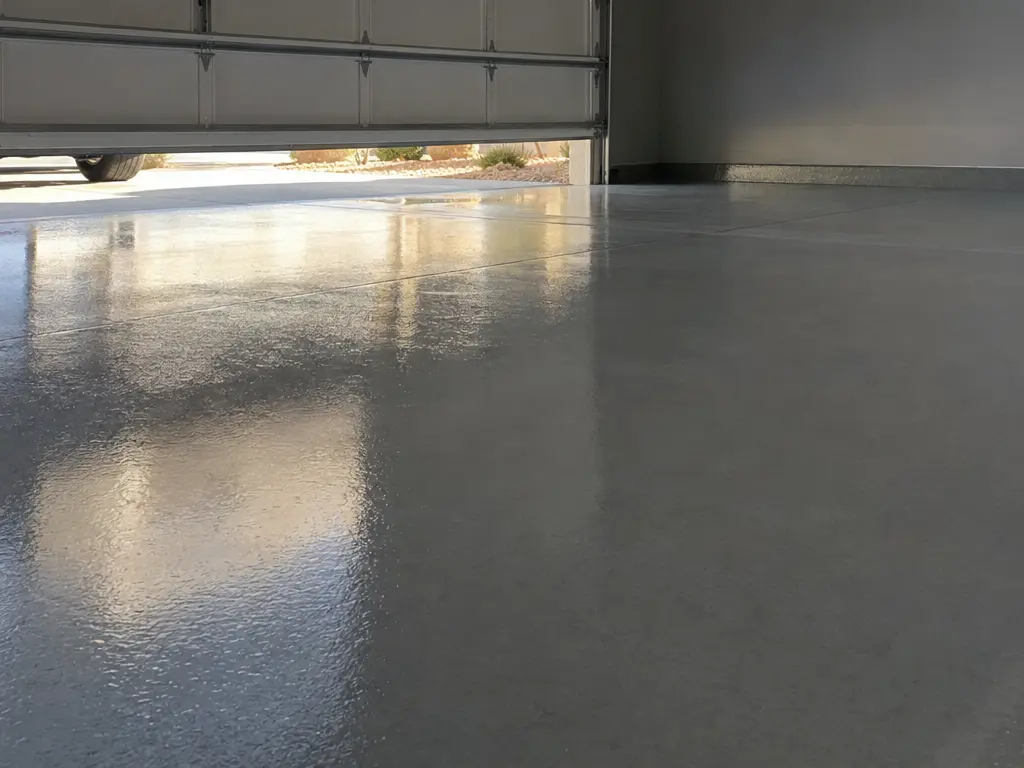
Fast-setting polyurea and polyaspartic for a garage you need back soon, with color that holds under UV.
Read more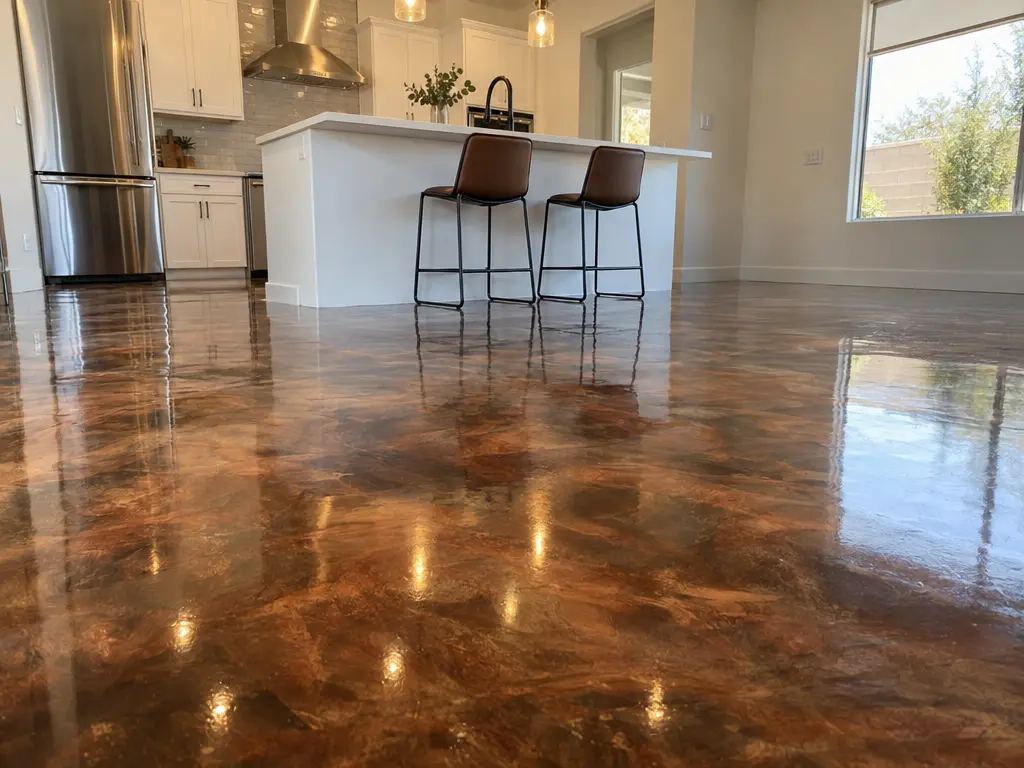
Metallic epoxy in swirled, pearl-like patterns for a den, home gym or converted garage.
Read more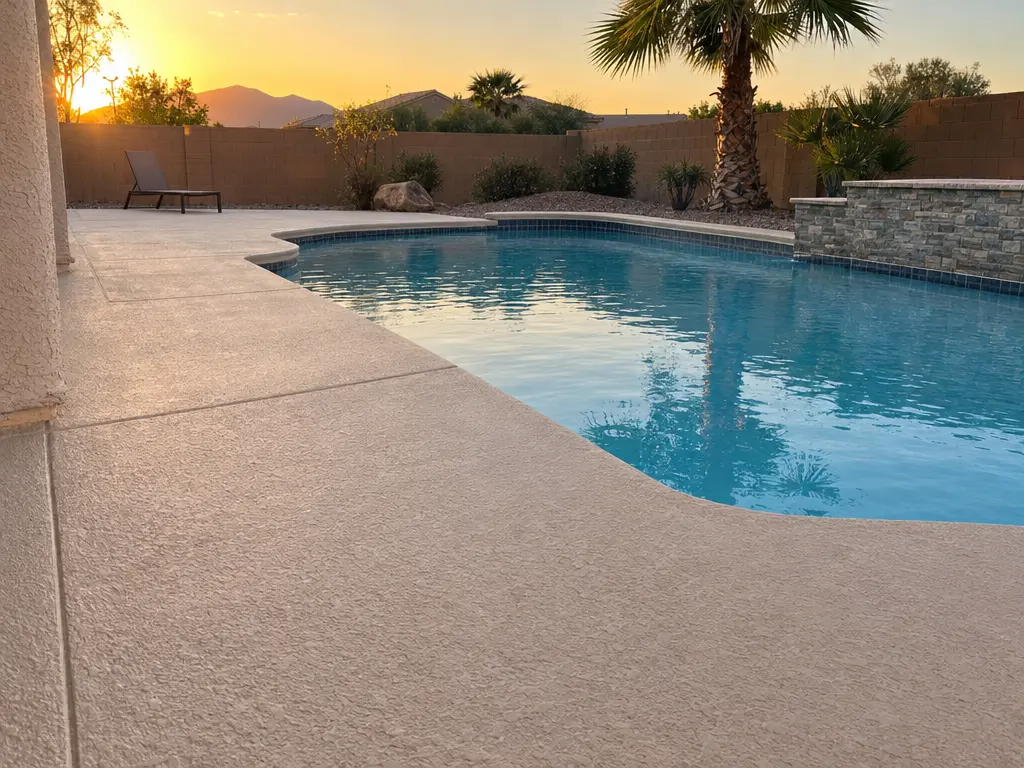
Textured cool deck finishes and coatings for backyard pool decks, on existing concrete only.
Read more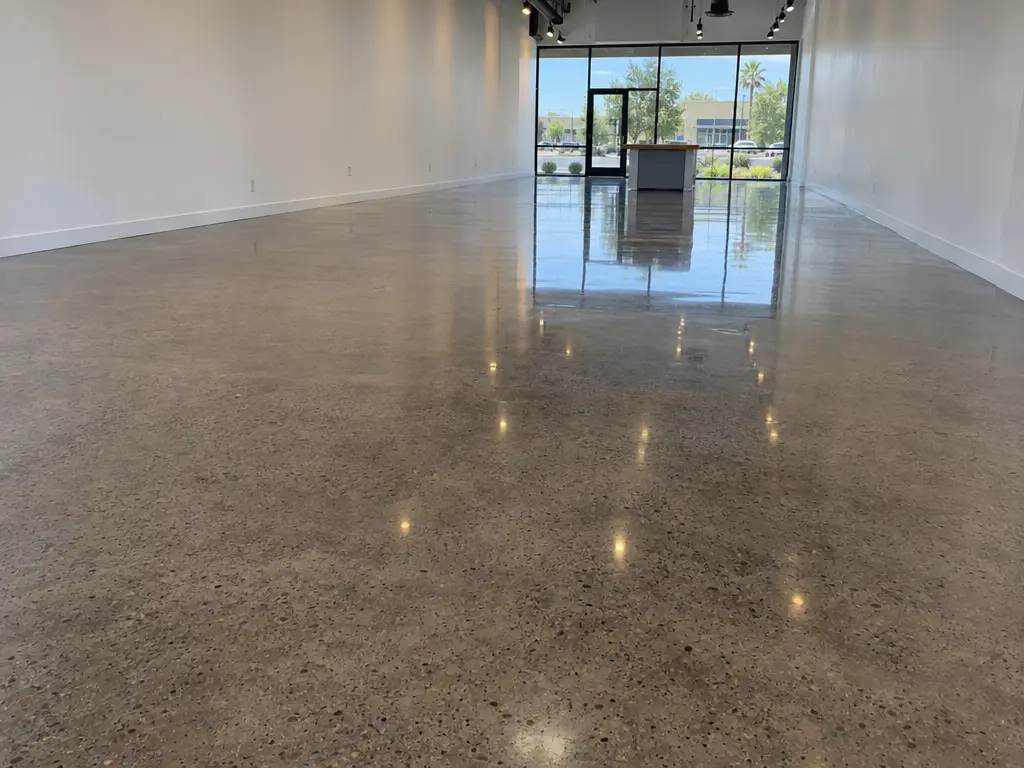
Coated or polished floors for warehouses and shops along I-15 and Losee Rd.
Read more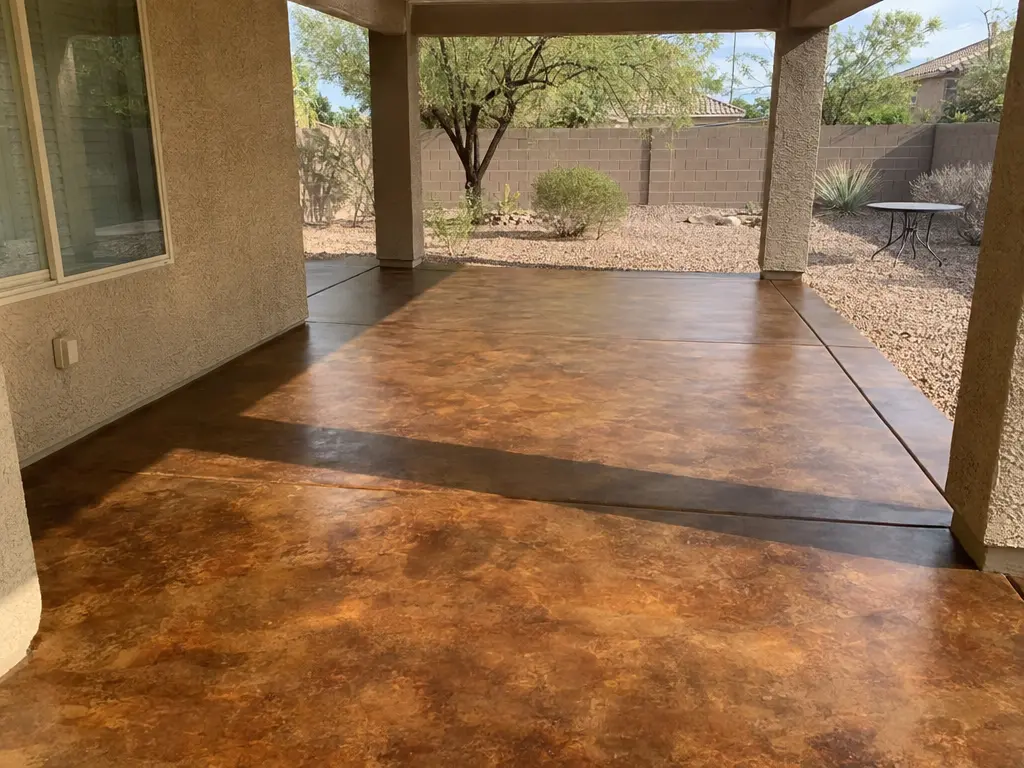
Penetrating sealers and stains for driveways, walks and patios that need protection from sun and spotting.
Read more