
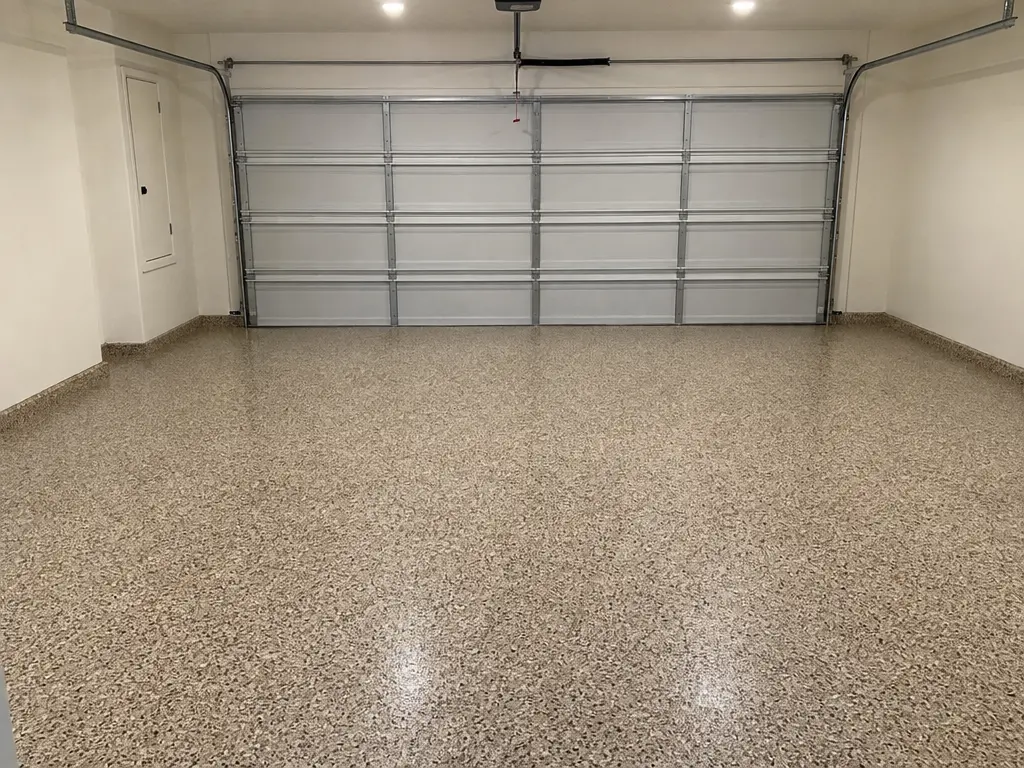
Garage Floor Epoxy
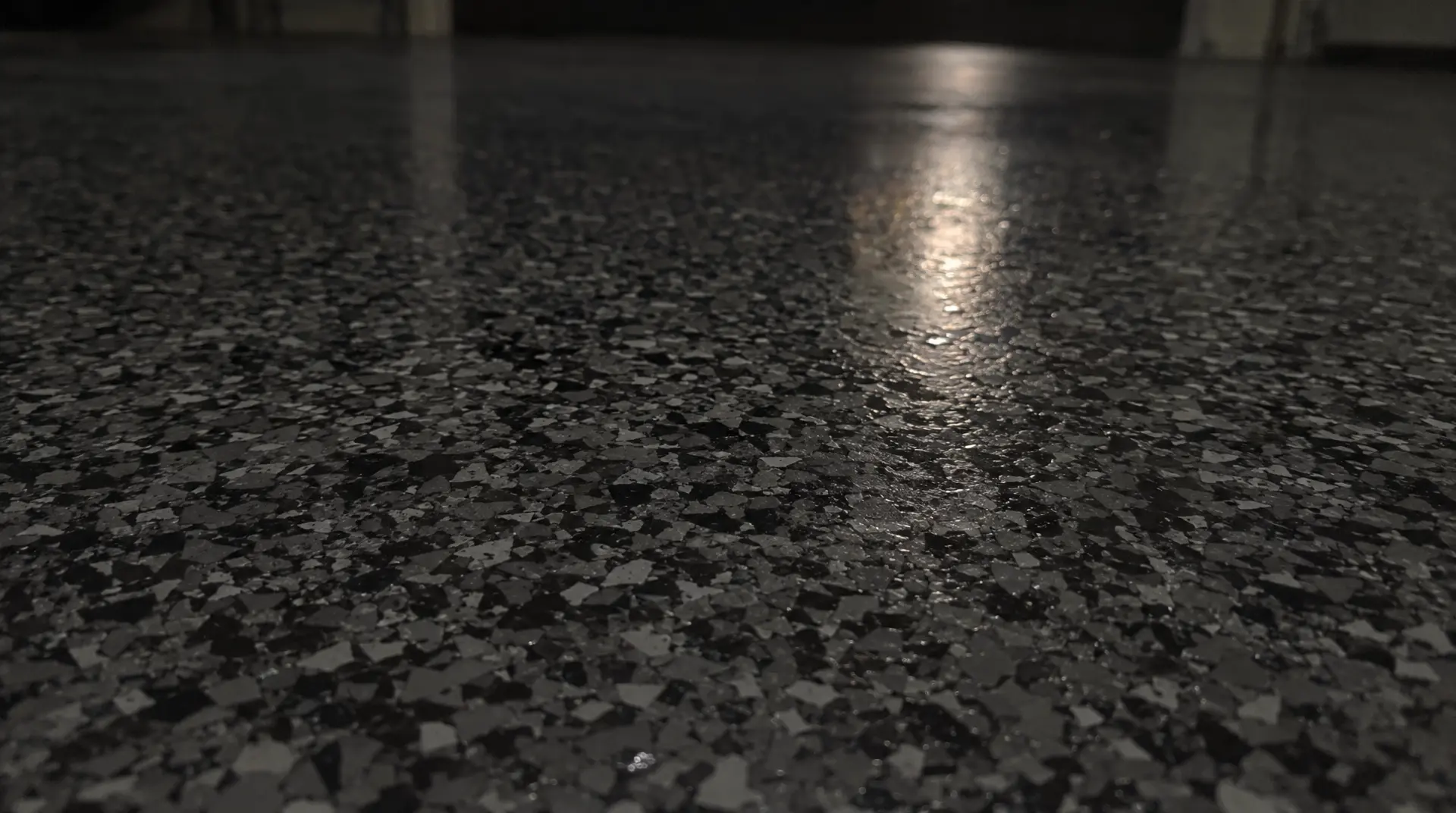
Flake epoxy over a diamond-ground slab, sealed with a clear coat that stands up to hot tires.
Read more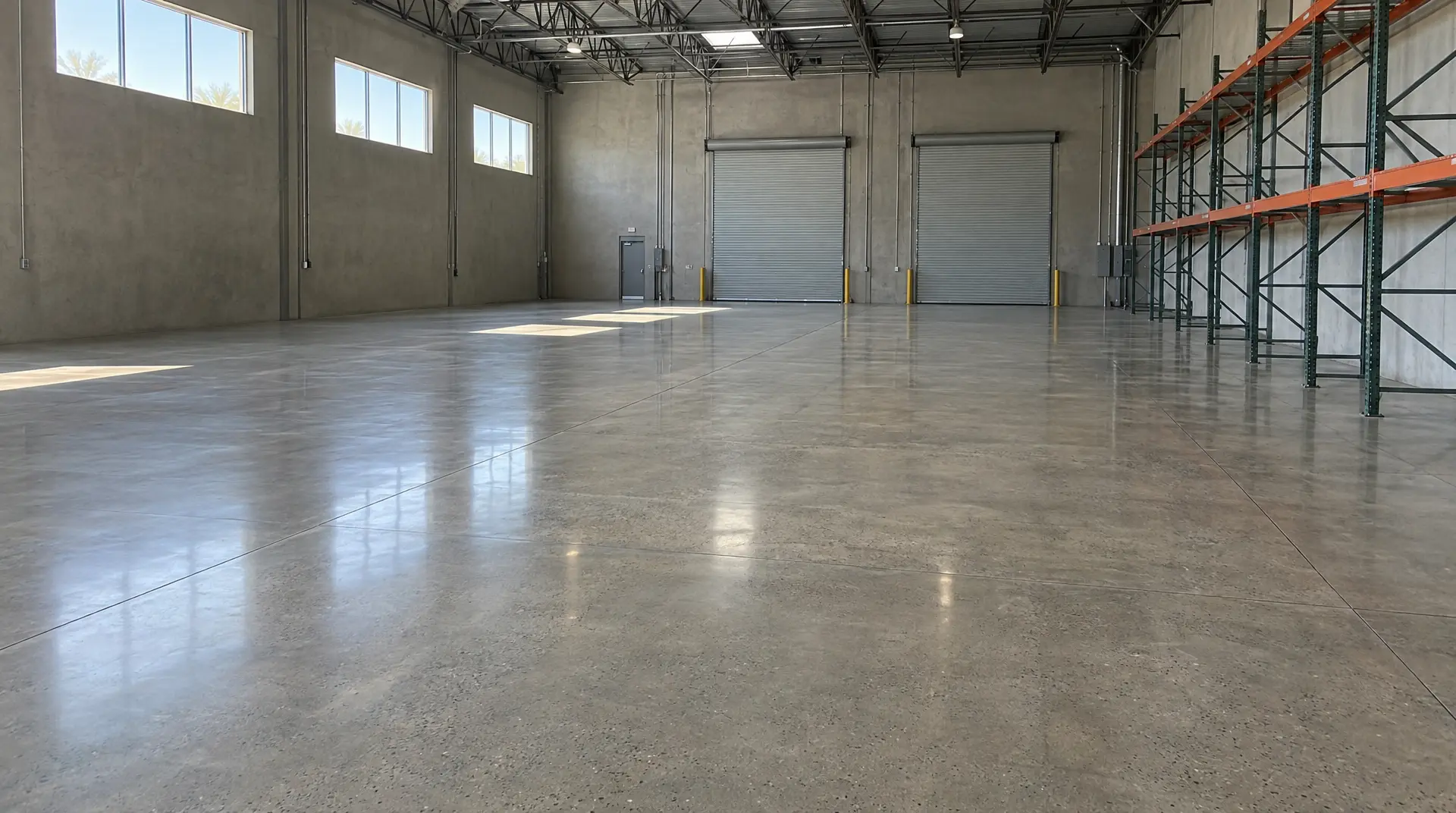
Epoxy floor systems and mechanically polished concrete for warehouses, shops, showrooms and garages. We test the slab, grind with vacuum-shrouded tools and give you a written scope. Businesses across Spring Valley and the Clark County side of the valley.
These are the floor problems Spring Valley business owners bring us most. Some point to a coating, some to polishing, and a couple tell us the slab needs work before anything goes on it.
Bare slab shedding fine powder onto racks and stock. A densifier during polishing hardens the surface and stops it.
An old coating lifting at doorways and forklift paths, usually from a thin film or weak prep under it.
Oil, coolant and tire marks soaked into bare concrete. They get ground out, or a new coating will not stick there.
Bubbles or lifting on slab-on-grade usually mean moisture vapor pushing up. A moisture test finds it before we coat.
A topical sealer worn through in the traffic paths. Mechanical polishing puts the shine in the stone, not in a film.
Cracked or lifted epoxy near fryers and wash stations. Thermal shock beats thin epoxy; urethane mortar is built for it.
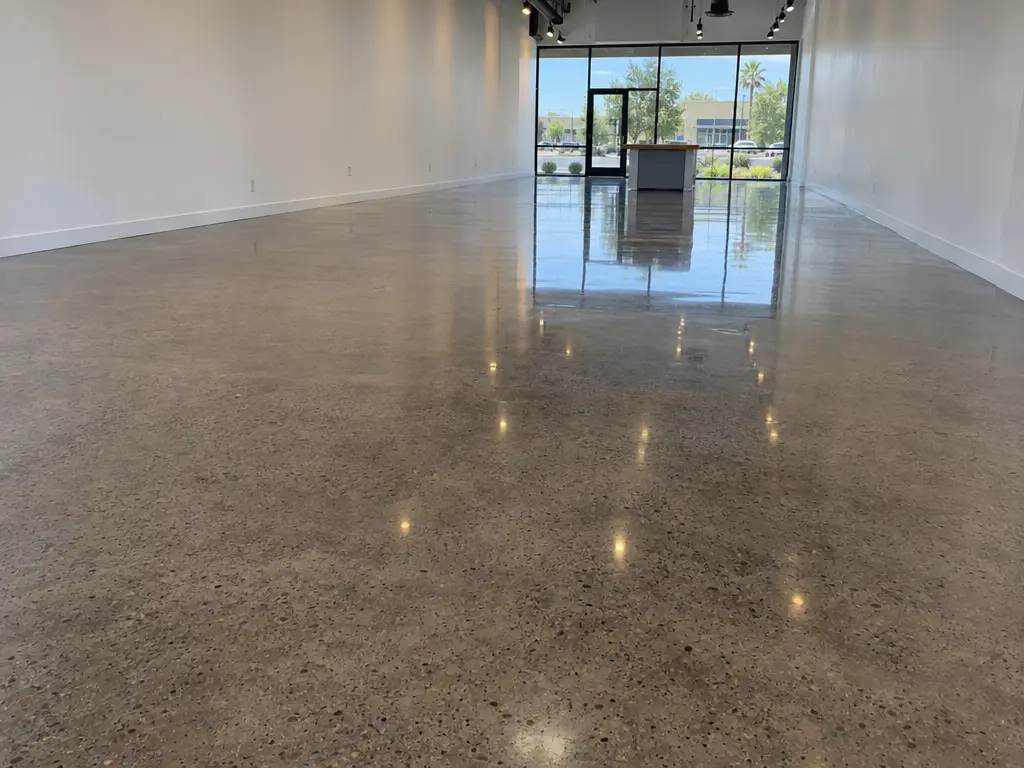
This will depend on your requirements. Polished concrete is a low-maintenance option for showrooms, retail and warehouse environments. There is no coating to chip off, and polished floors have tested above the 0.42 wet slip line. Shops or garages that see oil, chemicals or heavy wheels need an epoxy floor, with a UV stable topcoat where bay doors stay open. Commercial kitchens need a urethane mortar. Business floors in Spring Valley range from the UNLV Harry Reid Research and Technology Park off Sunset Road to retail outlets along Spring Mountain Road. We quote both options in writing so you can compare them side by side.
Tell us the square footage, what happens on the floor each day, and when the space can close. Photos of trouble spots help.
We check slab age, old coatings, oil and moisture. The system, polish level and price then go into one written estimate.
We plan around your hours. Large floors can be done in sections so the rest of the space keeps working. Cure time follows temperature.
Grinding runs through shrouded tools and HEPA vacuums. Then come the coating layers or polishing passes, and a clean floor before you move back in.
Match the floor to the traffic, the spills and how often you can close the space for upkeep. Four systems cover most business floors.
| System | Finish | UV | Upkeep | Fits |
|---|---|---|---|---|
| Epoxy, polyaspartic top | Thick color film, flake or solid | Top holds color; epoxy under it can amber | Topcoat is the wear layer | Shops, garages, warehouses |
| Polished concrete | Shine ground into the slab, Levels 1-4 | Yes, no film to yellow | Dust-mop and scrub, no recoat | Showrooms, retail, warehouses |
| Grind and seal | Ground slab under a topical sealer | Depends on the sealer | Sealer wears, needs recoating | Lower cost up front |
| Urethane mortar | Heavy, textured mortar | No, yellows in direct sun | Takes hot spills and washdowns | Commercial kitchens |
We give you both answers. A coating company tends to sell coatings, and a polishing outfit sells polish. We look at the slab and the work done on it, then tell you which one fits and why, in writing.
Besides business floors, here is the rest of the coating and concrete work we take on around the valley.
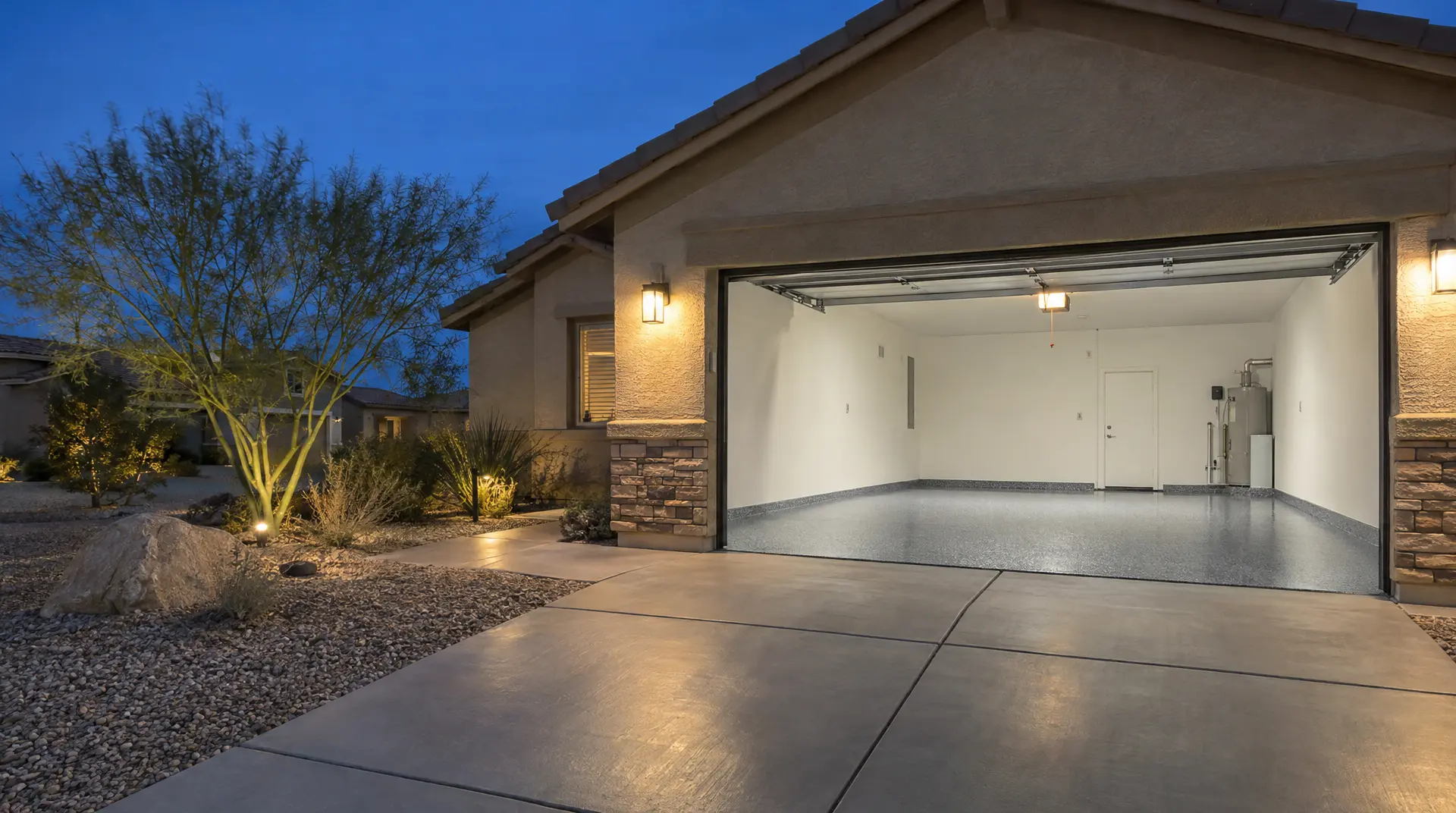
Flake epoxy over a diamond-ground slab, sealed with a clear coat that stands up to hot tires.
Read more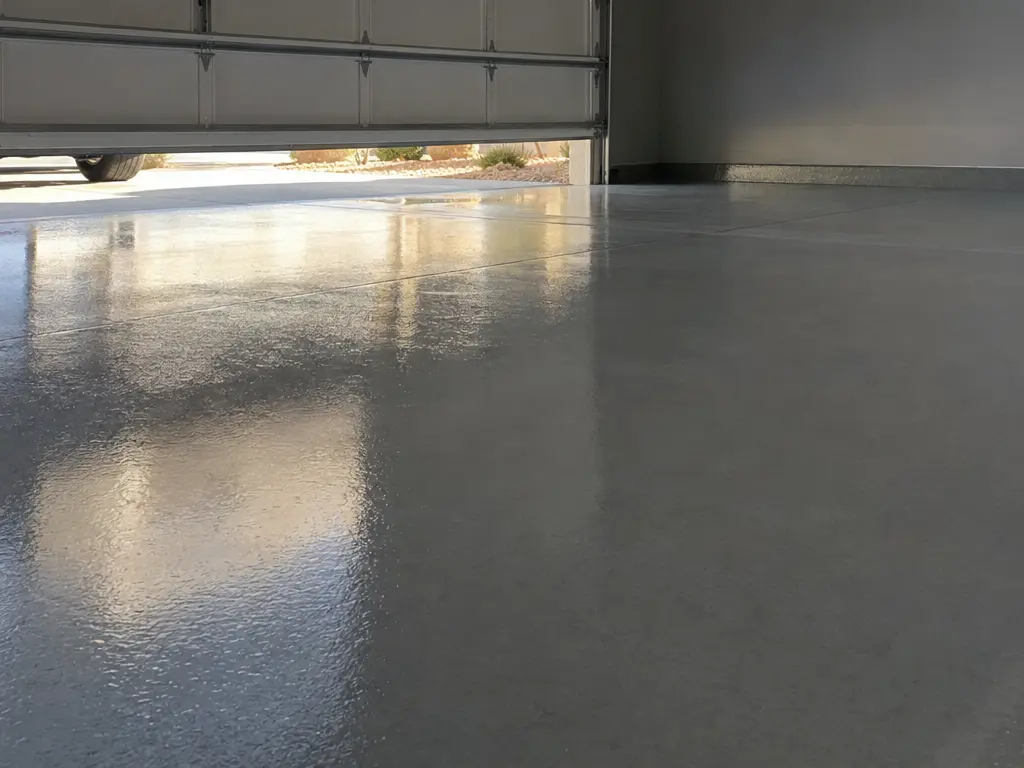
Polyurea and polyaspartic systems with a quick cure and a topcoat that holds its color in sunlight.
Read more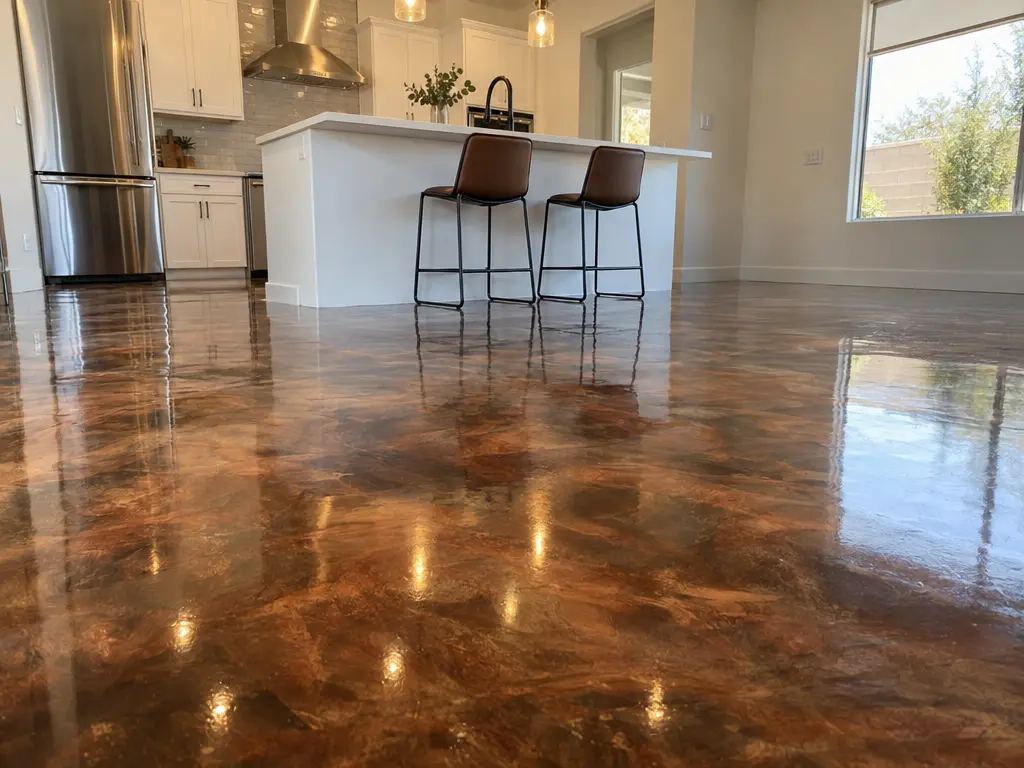
Metallic pigments worked by hand into clear epoxy for a marbled floor nobody else will have.
Read more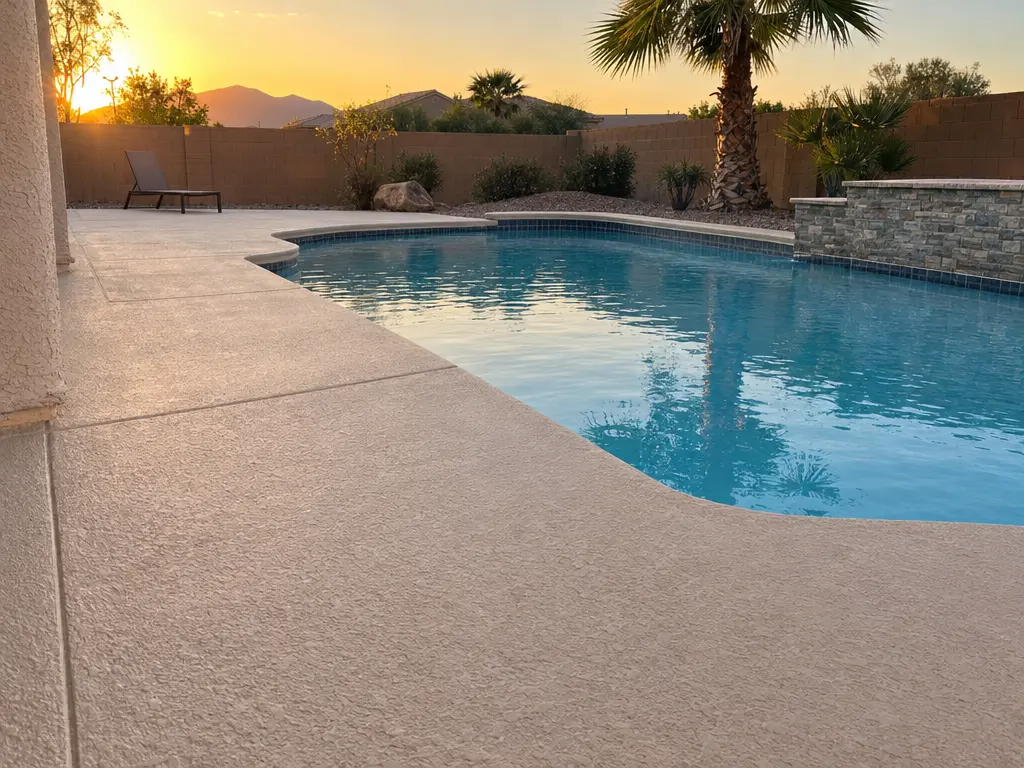
Resurfacing and recoating for the concrete deck around a backyard pool, from crack repair to texture.
Read moreCoated or polished floors for warehouses, shops and showrooms, picked to match the traffic they carry.
Read more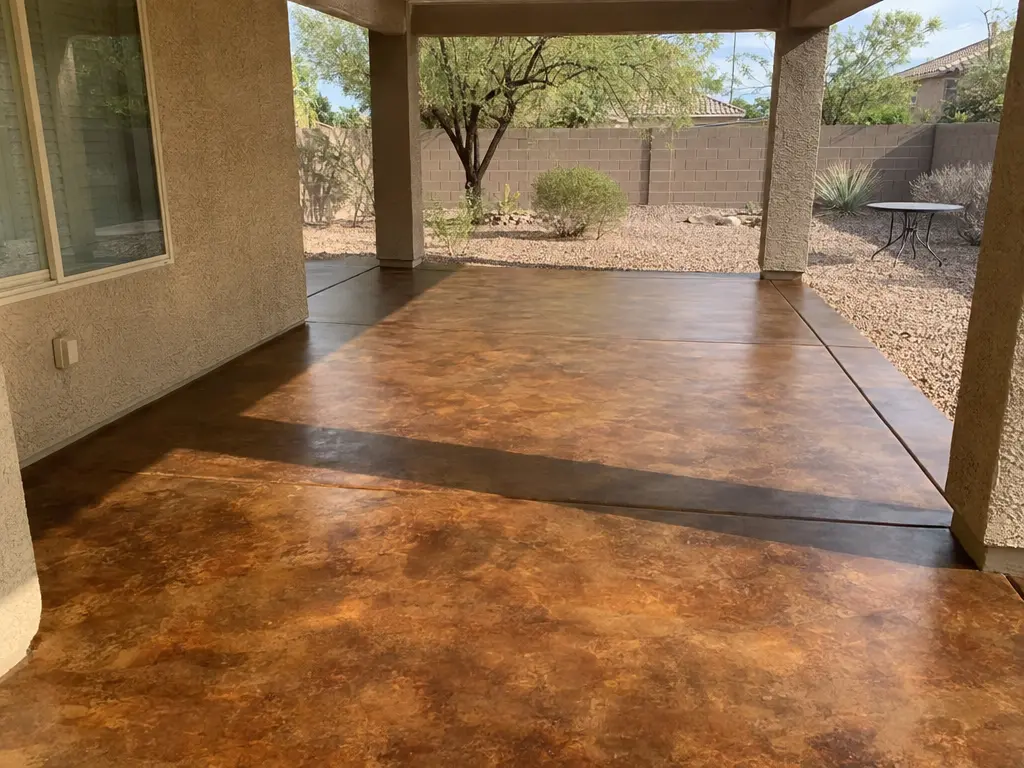
Stain color for plain gray slabs, plus penetrating or film sealers to protect it afterward.
Read more