
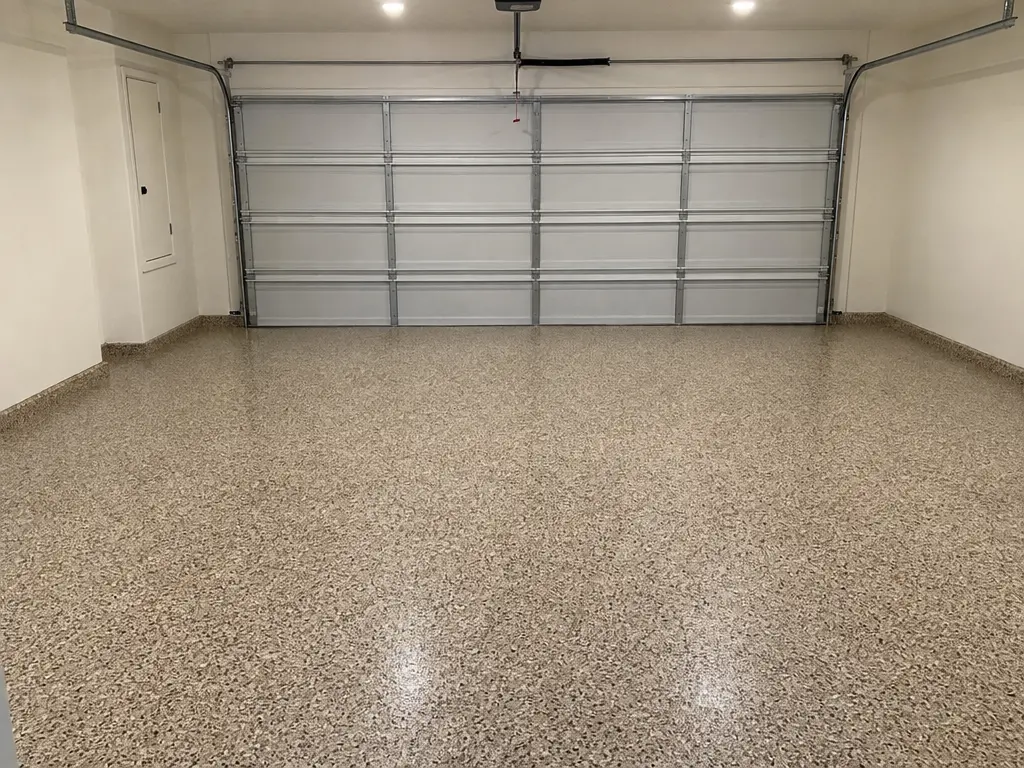
Garage Floor Epoxy
A thick 100%-solids epoxy body, a vinyl chip broadcast and a sealed top, laid over a diamond-ground, moisture-checked slab.
Read more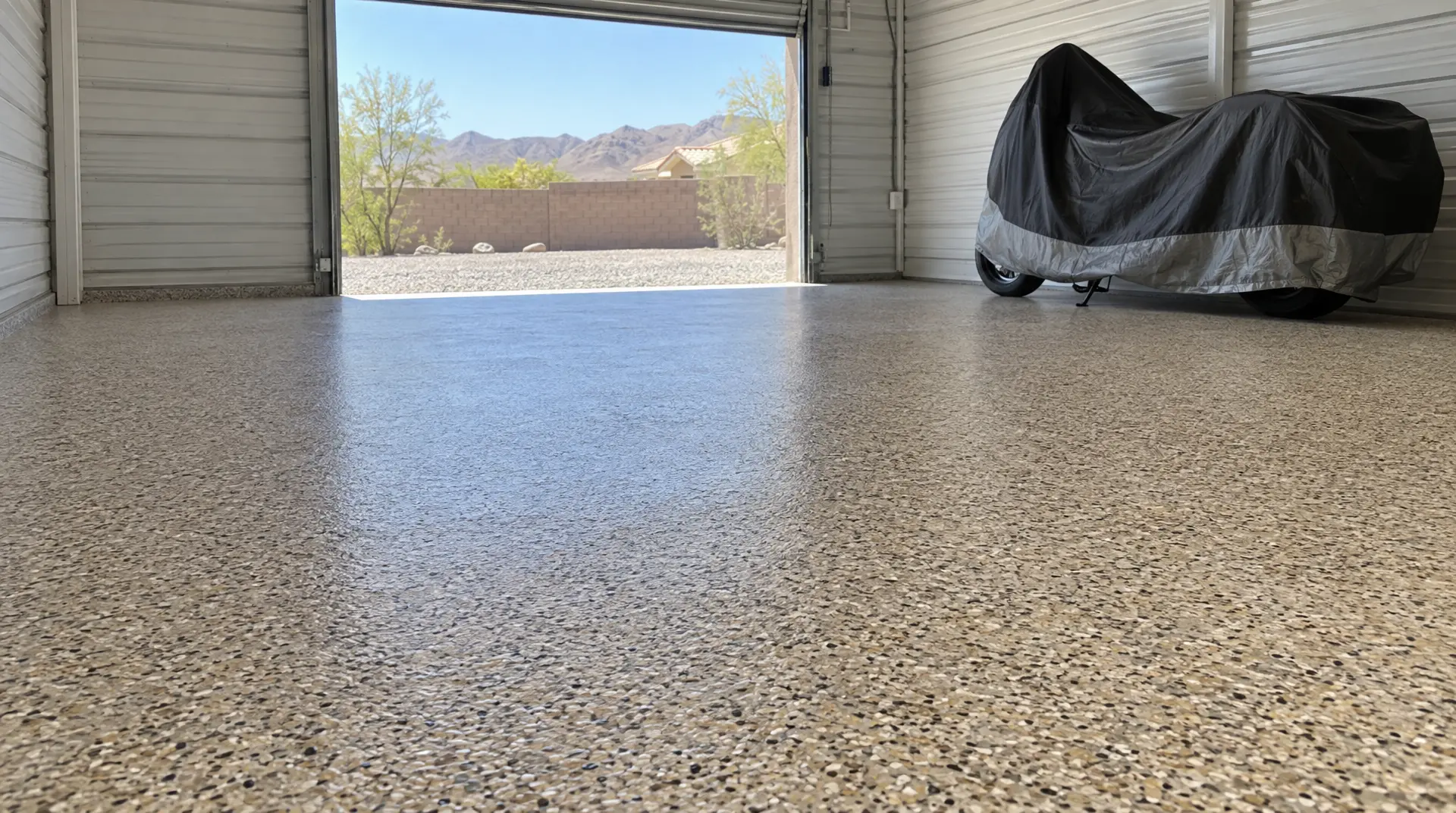
Polyaspartic and polyurea garage floors for Spring Valley homes where the door stays open and the sun gets in. We grind and test the slab, then roll on coats that cure in hours and do not yellow.
These are the problems that move people from plain epoxy to a polyaspartic or polyurea system. Most come down to sun, heat or downtime. Two or more sound familiar? The faster, color-stable chemistry is probably worth it.
Aromatic epoxy ambers where afternoon light crosses the floor. The band by the door goes first, then it spreads.
UV breaks down the surface of older coatings at the door line, leaving a dull, powdery strip.
Slow-curing epoxy keeps a garage shut longer. Polyaspartic can take its next coat in as little as two hours.
Hot tires pull soft coatings loose. A hard polyaspartic wear layer resists that pickup better than thin epoxy film.
Epoxy outdoors ambers and can blister from vapor below. Driveways and patios need an aliphatic system.
Chips poke through and the floor feels rough. The clear top is the real wear surface, and it has thinned.
The sun will deteriorate normal epoxies, but polyaspartic will not yellow. Epoxies are aromatic, so UV exposure turns them amber. Polyaspartic and aliphatic polyurea will not fade. Summer UV levels here can be extremely high; in July 2026 News 3 reported an index of 12. Leave the garage door open in Spring Valley and that intense light lands right on your floor. Temperatures are high too. The normal July high is 104.5F, and the warmer the air, the shorter the pot life, so we mix small batches. On many products you get a floor that takes light foot traffic within hours, with a tough wearing surface that resists hot tire pickup.
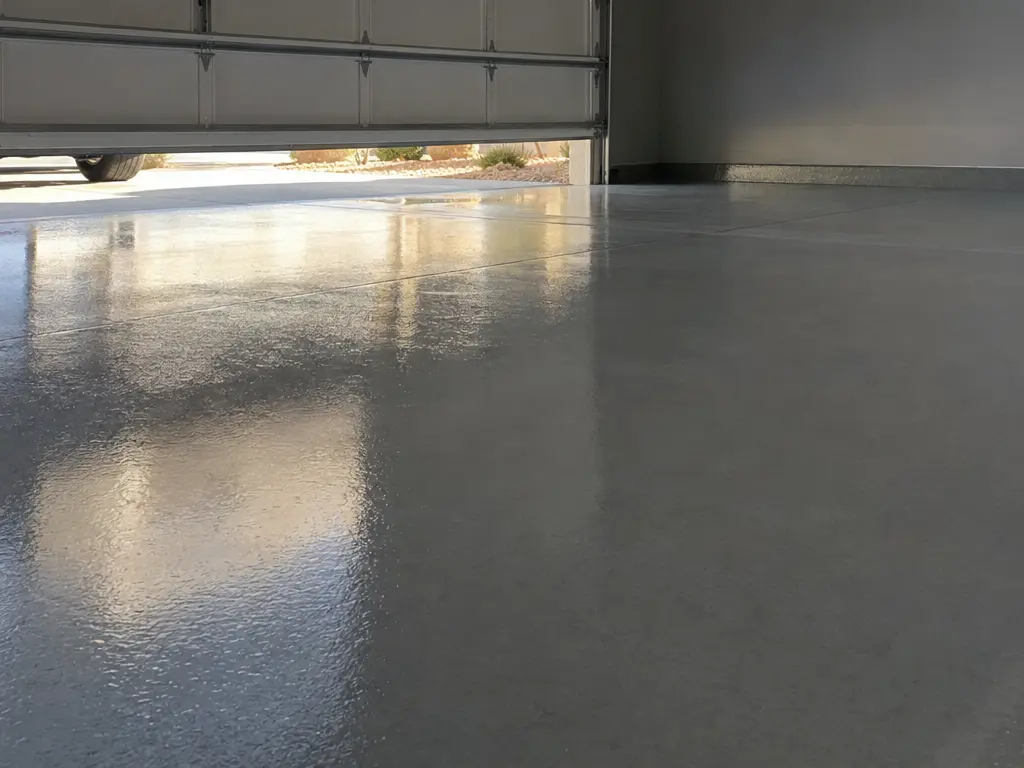
Tell us the garage size, which way the door faces, and whether you want flake, solid color or a clear coat on bare concrete.
We test moisture, check any old coating and mark cracks. The written estimate names the system, the base coat and the top coat.
Polyaspartic has a short pot life. Summer jobs start early, while the slab and the air are at their coolest.
Grind, fill, base, flake, then the polyaspartic top. We tell you when feet can return and when the car can.
Each of these cures faster than epoxy. What separates them is UV behavior, how they go on, and how long you get to work the material.
| System | How it goes on | UV stability | Cure speed | Good fit |
|---|---|---|---|---|
| Polyaspartic | Roller or squeegee, longer working time | Yes, aliphatic, no yellowing | As fast as 2 hours per coat | Sunny garages, patios |
| Straight polyurea | Sprayed with plural-component rigs | Aliphatic yes, aromatic no | Sets in minutes | Fast base coats |
| Polyurea base, polyaspartic top | Fast base, hand-rolled top | Yes, with an aliphatic base | Hours per coat | Full flake garage systems |
| Epoxy base, polyaspartic top | Thick epoxy body, poly wear coat | Top holds; epoxy below can amber | Slow base, fast top | Garages kept closed |
Fast-cure coatings punish rushed work. Mixed material left too long skins or ropes. Miss the recoat window and the floor needs sanding before the next coat will bond. We size batches to the heat, watch the clock, and abrade between coats when we must.
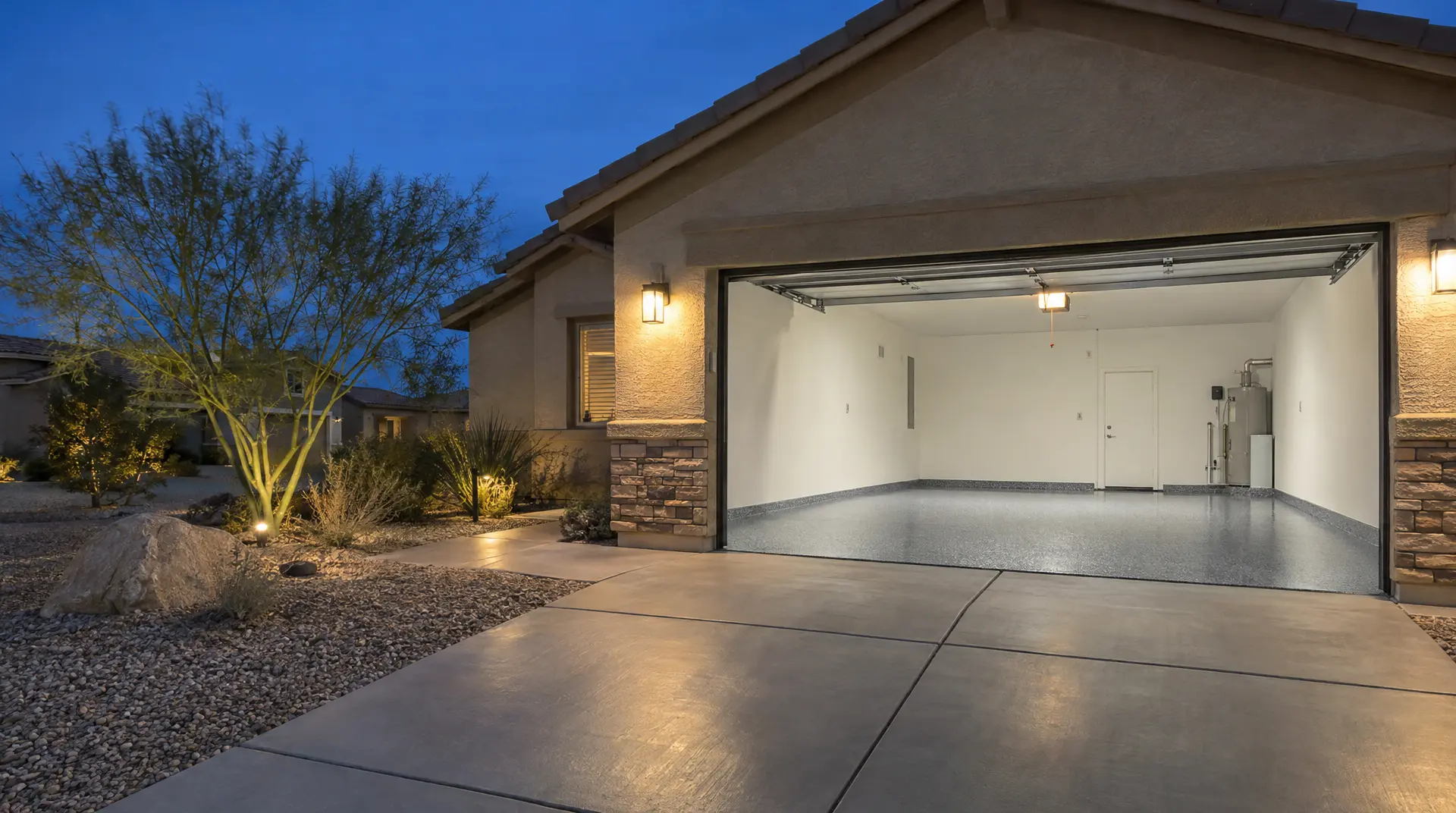
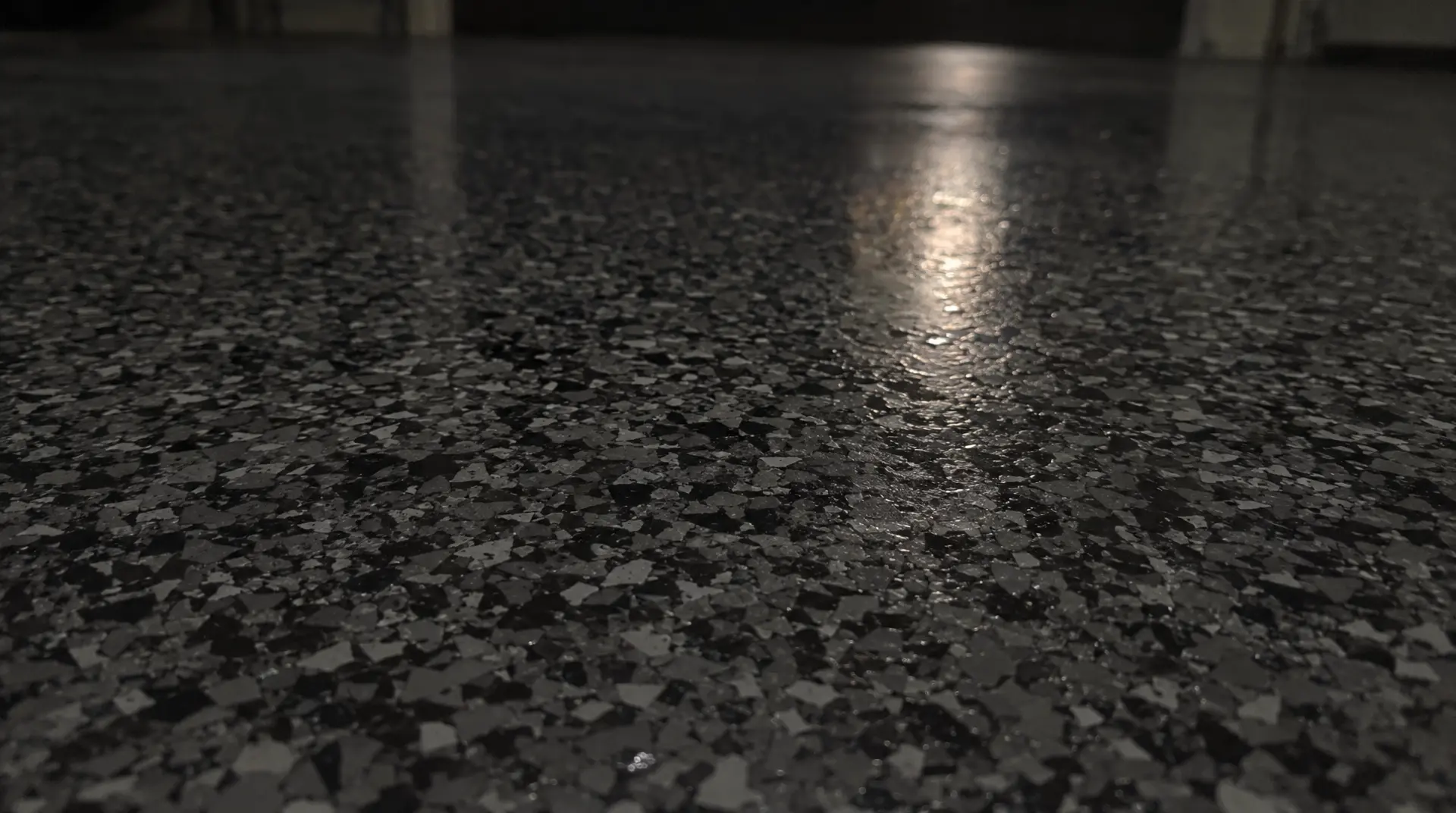
Six kinds of work, one prep standard: every slab is ground, cleaned and tested before anything goes on it.
A thick 100%-solids epoxy body, a vinyl chip broadcast and a sealed top, laid over a diamond-ground, moisture-checked slab.
Read moreColor-stable aliphatic coats that roll on fast and cure in hours, for garages and patios that catch direct afternoon light.
Read more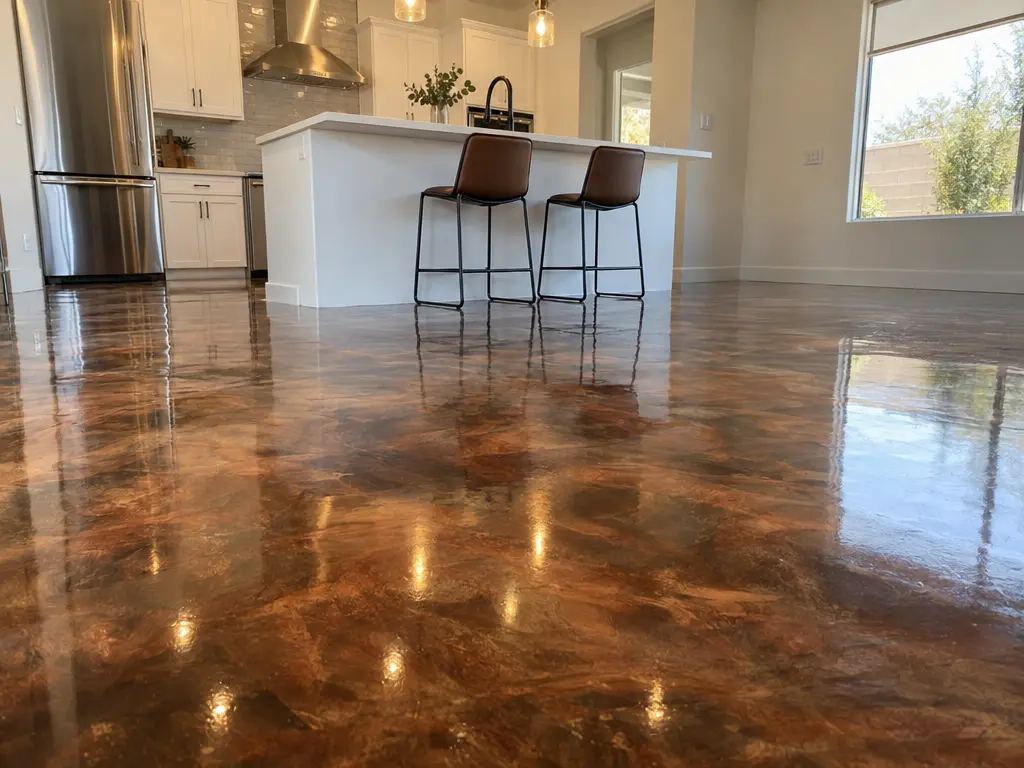
A one-off marbled floor made by working metallic pigment through wet clear resin, then sealing it for indoor rooms.
Read more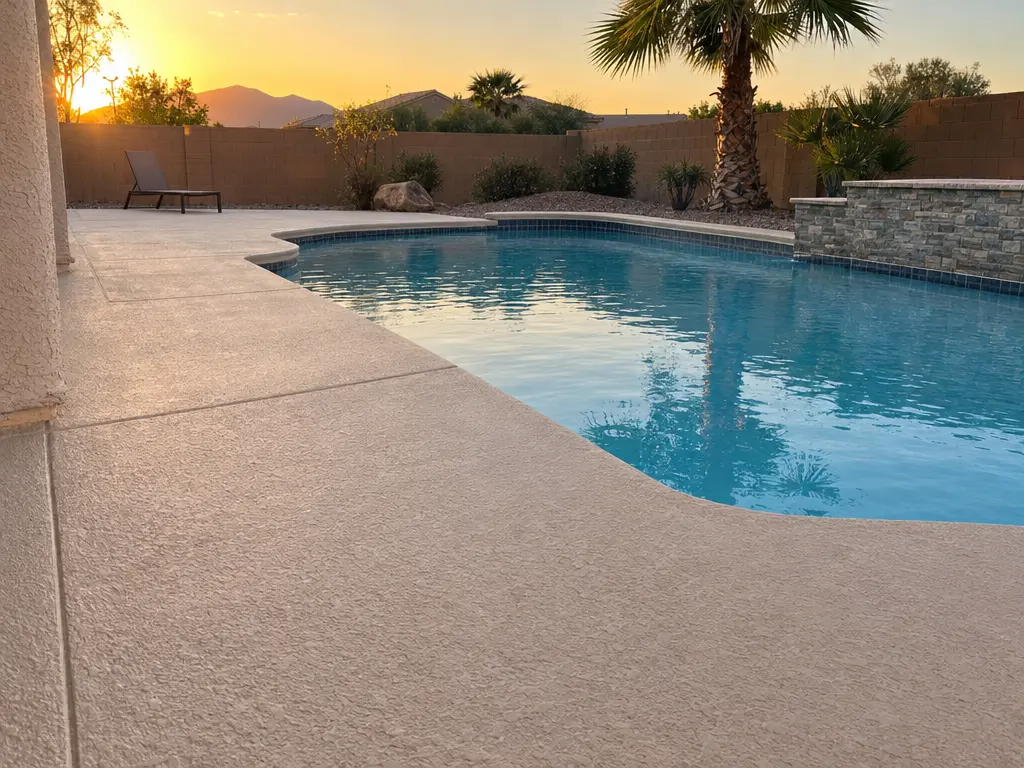
Resurfacing and recoating around backyard pools with a light, textured surface that gives bare feet some grip when wet.
Read more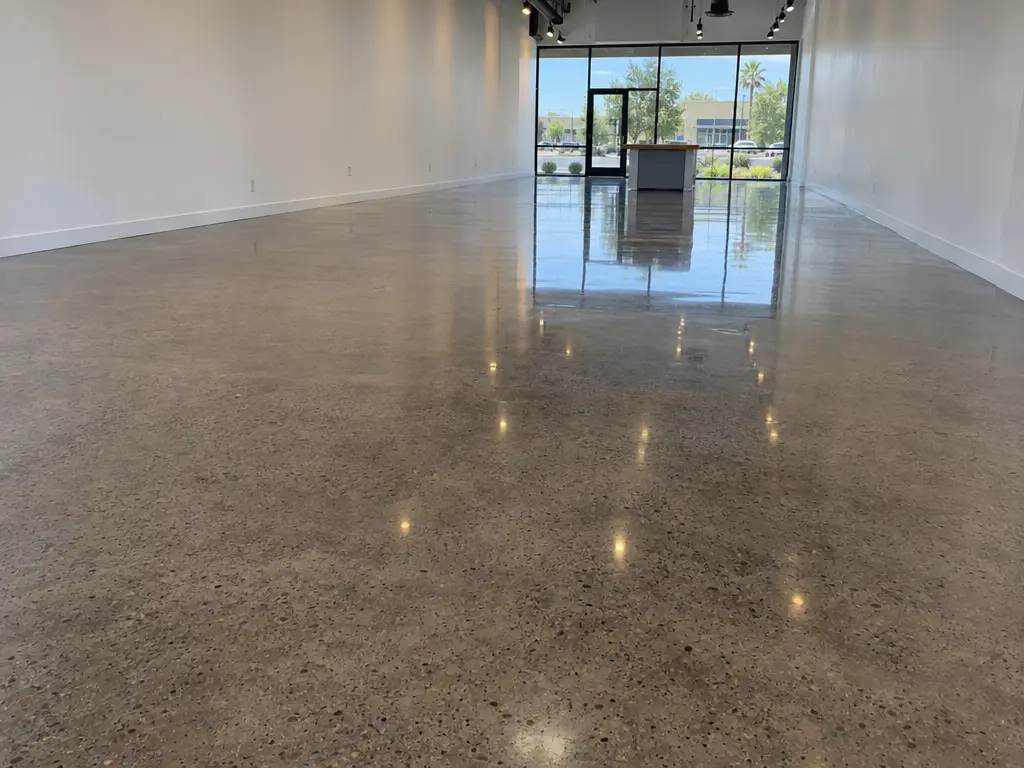
Grind-and-polish or resin systems for retail floors, offices and warehouses, with dust collected at the grinder on every pass.
Read more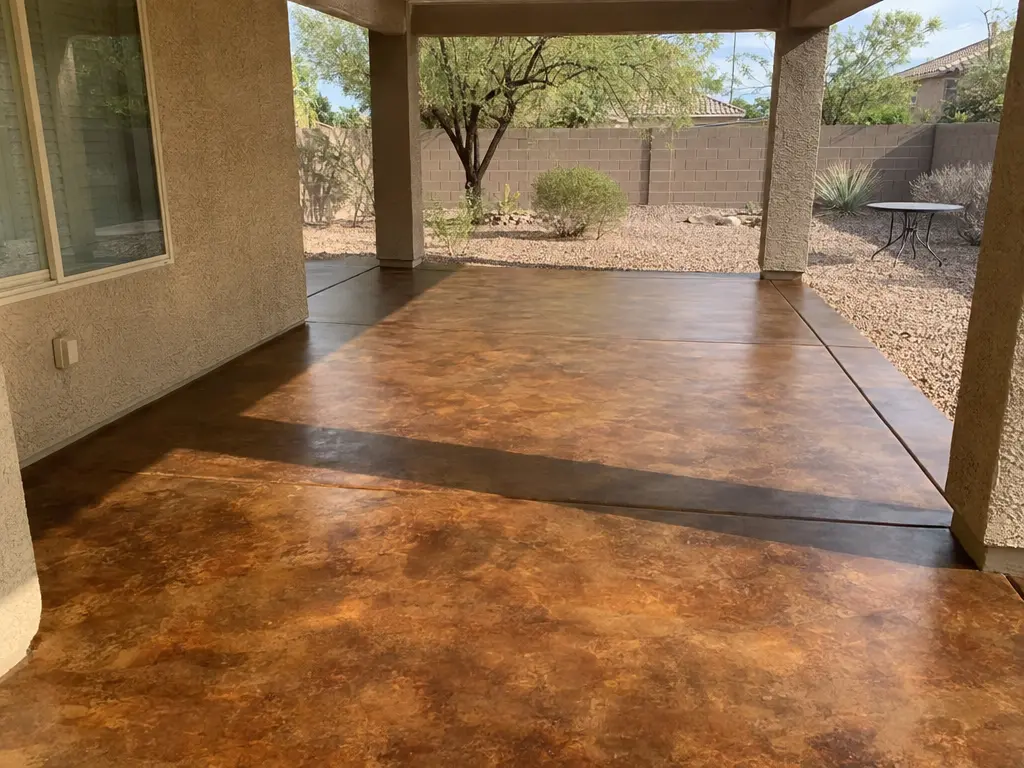
Reactive and water-based stain on existing concrete, finished with a sealer that protects the color and gets renewed every few years.
Read more